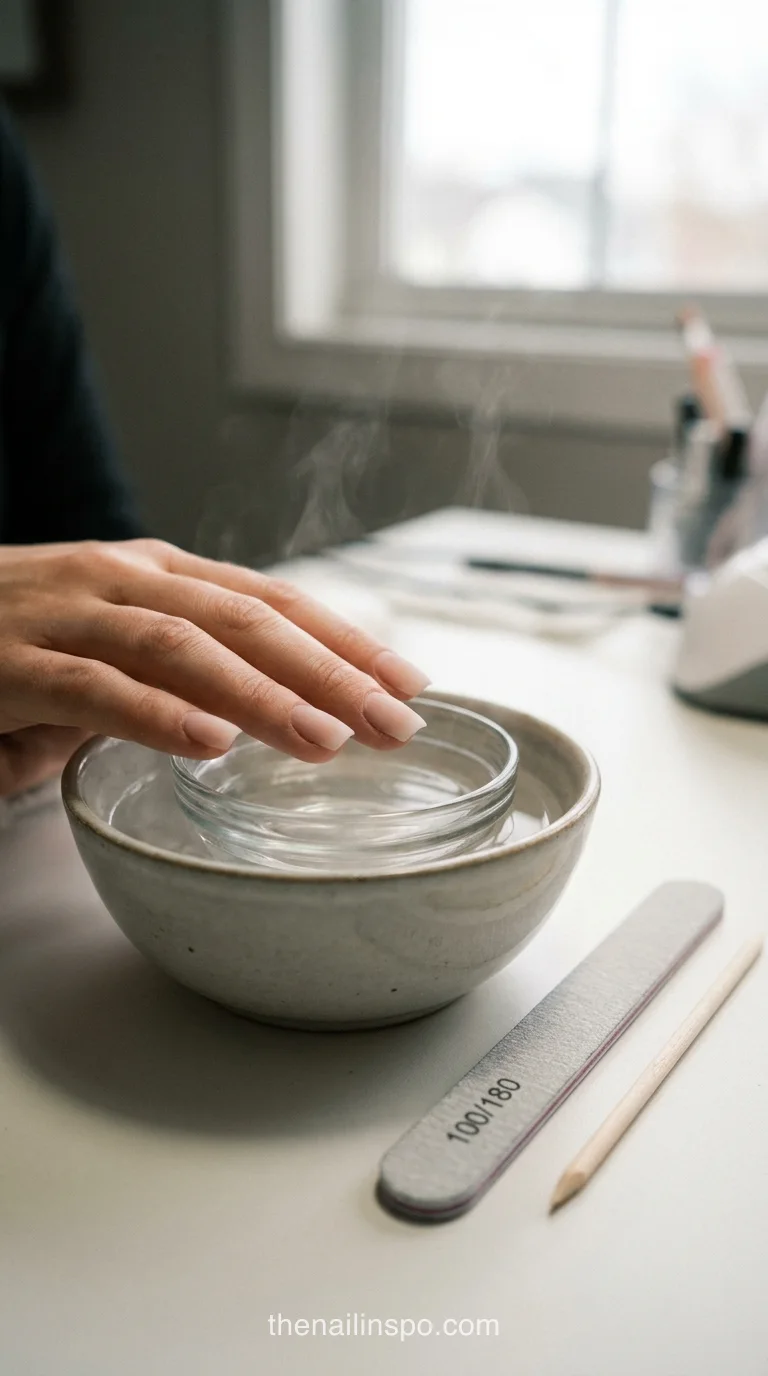
If you’re working out how to remove dip nails at home, here’s the short answer: file off the shiny top layer, then soak in warm 100% acetone while rubbing the nails against a sponge, so fresh solvent keeps hitting the resin. No metal scraper. No ten-finger foil marathon. I’m Sophia Beed, a London nail technician and educator with nine-plus years of salon removals behind me, and this is the method I’d hand a client to do on her own sofa.
Key takeaways- Dip resin dissolves faster in acetone that’s warm and moving, so agitation beats extra soak time.
- Pure acetone boils at 133°F (56.2°C), so any warm water bath around it should stay below 130°F (54.4°C).
- Freshly soaked natural nails stay soft for up to an hour, which makes metal tools a bad idea.
- A home removal costs a few dollars in acetone, while a standalone salon removal typically runs $12 to $22.
Dip Powder Removal Works Faster With Warmth and Motion
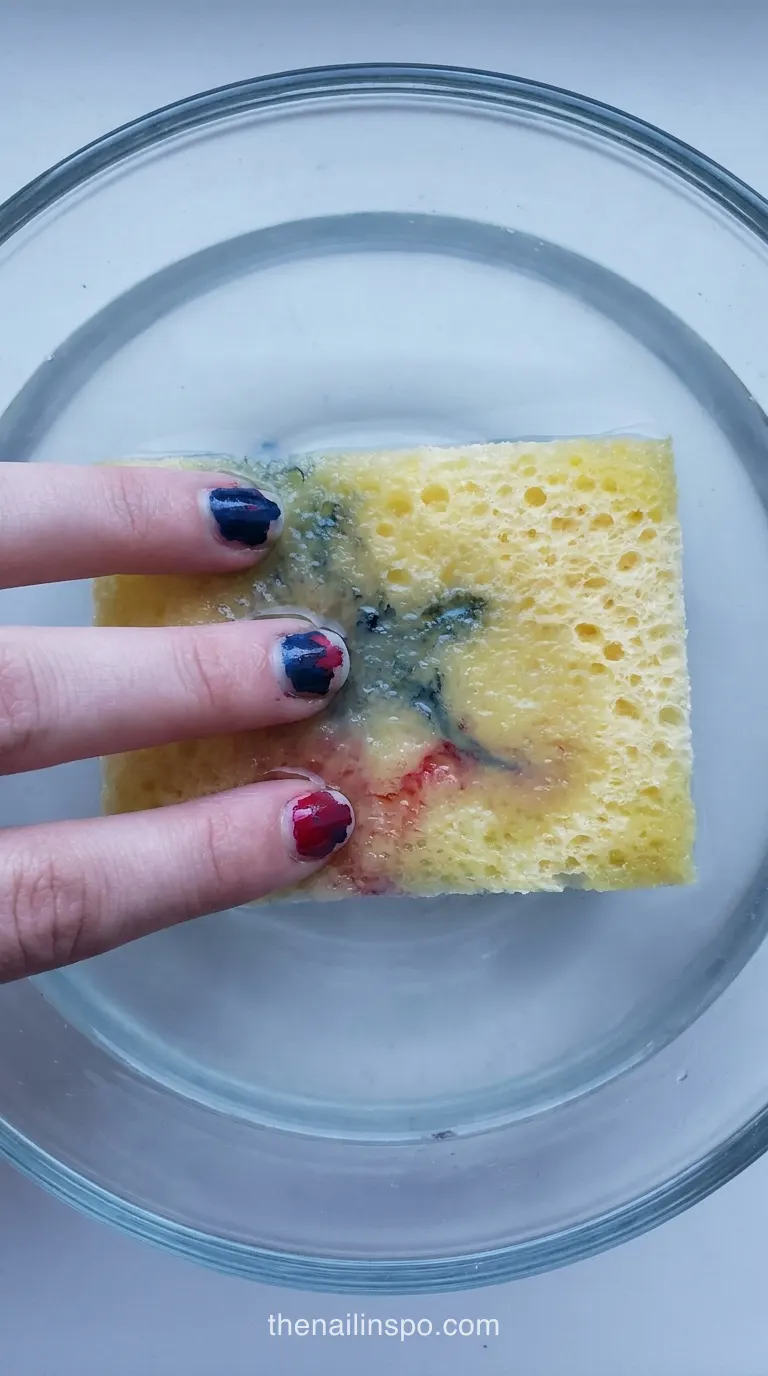
Dip powder removal is a dissolving job. Scraping is what you end up doing when the dissolving went wrong. Acetone breaks down the cyanoacrylate resin binding each powder layer, and it works fastest warm and moving, because the acetone right against the nail fills with dissolved resin and slows down if nothing stirs it.
Practitioners I trust report that rubbing nails against a dish sponge or textured towel, submerged in warm acetone inside a zip-top bag, clears product in 5 to 10 minutes. That’s their field number, not mine or a lab’s, and a thick set will run longer. But the logic holds. Twenty minutes sitting still in foil is just the slow version of the same chemistry.
How Long Does It Take to Remove Dip Nails?
Plan on 30 to 40 minutes for both hands, start to finish. Filing takes a few minutes, the agitated soak fills most of the middle, and the rest is wiping and oiling. A four-week-old set, or one built heavy at the apex, sits at the long end. I’d rather you block out 45 minutes and finish early than rush the last stubborn patch.
The Five-Item Kit for Home Removal
The core five are 100% pure acetone, a 100/180 grit file, two heat-safe bowls that nest (glass or ceramic, since acetone can soften some plastics), a new dish sponge, and jojoba or coconut oil. Beyond those, grab an orangewood stick, a few lint-free pads, a kitchen thermometer, and cuticle oil for afterward. Pick the 100/180 file over a buffer every time. The 100 side cuts through top coat fast, while a buffer mostly polishes the seal you’re trying to break.
 Read NextWhy Do Acrylic Nails Lift? 6 Secrets to Stop It Now
Why 100% Pure Acetone Dissolves Dip (and What Slows It)
Pure acetone is a strong solvent for the resin in dip systems, and concentration matters more than brand. Removers cut with water or fragrance still work, just slowly, and the longer soak dries out your skin more than the cheaper bottle was worth. Two other things slow any acetone down: an intact top coat, which is the toughest layer to dissolve, and solvent that’s gone cold.
Sophia Beed’s note: My working rule is that natural nail keratin starts to soften after about 60 seconds of liquid contact and stays easy to gouge for up to 60 minutes. It’s a rule from years behind the desk, not a lab figure, and it’s why my metal pushers stay in the drawer on removal days.
Warm Acetone Bath Safety: Stay Under 130°F
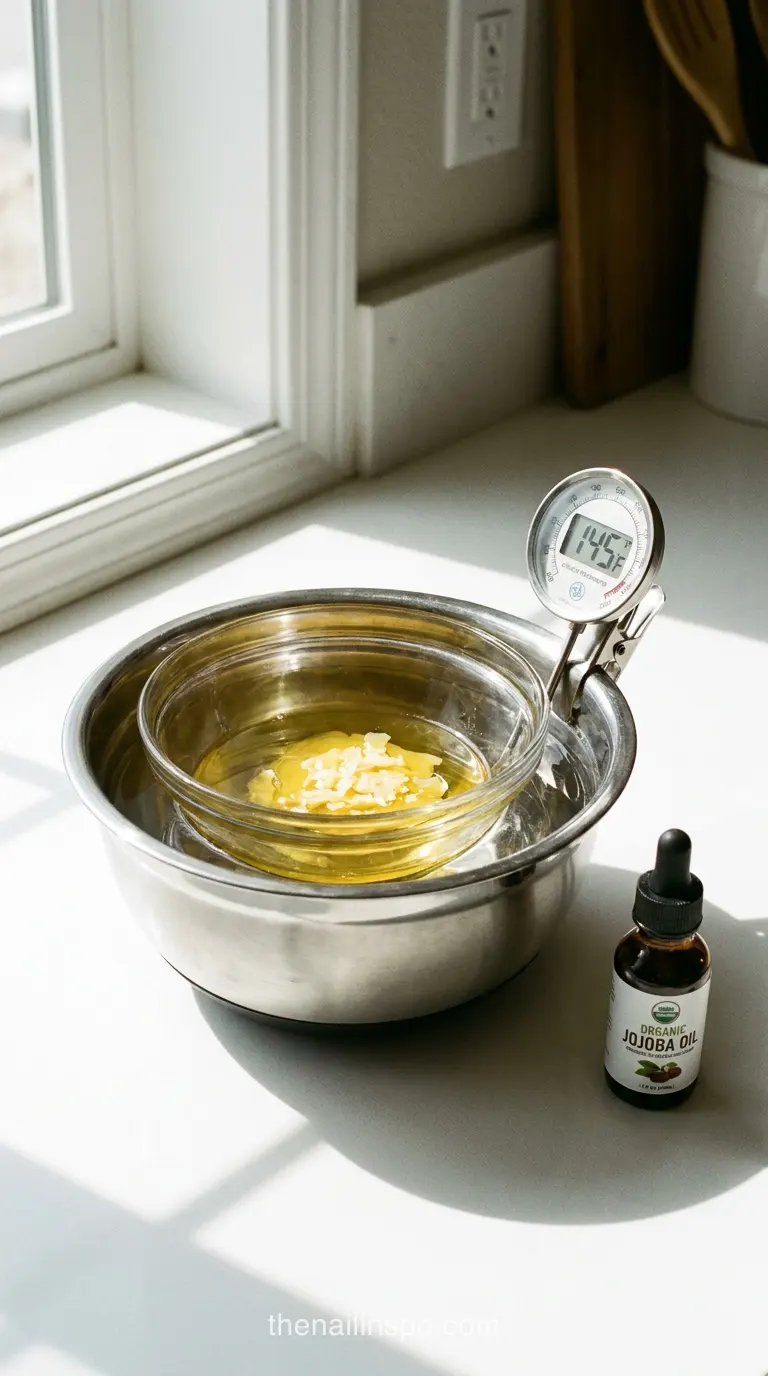
Warm acetone one way only: in a small bowl sitting inside a larger bowl of hot water kept below 130°F (54.4°C). Pure acetone boils at 133°F (56.2°C), and as it gets close, vapor comes off fast, which is a real fire risk in a small bathroom. Acetone is flammable at room temperature too. So no microwave, no stovetop, no candles, nothing with a flame or heating element nearby, and keep a window open. A cheap kitchen thermometer ends the guessing.
Does Adding Oil to Acetone Slow It Down?
No, according to the people who do it regularly. Users consistently report that one teaspoon of coconut or jojoba oil stirred into the bath stops the chalky white look on surrounding skin without slowing how fast the dip breaks down. I lean toward jojoba. Coconut oil firms up below about 76°F, so in a cold room it can clump before the bath warms it.
Foil Wraps vs a Warm Acetone Bowl: Which Method Wins
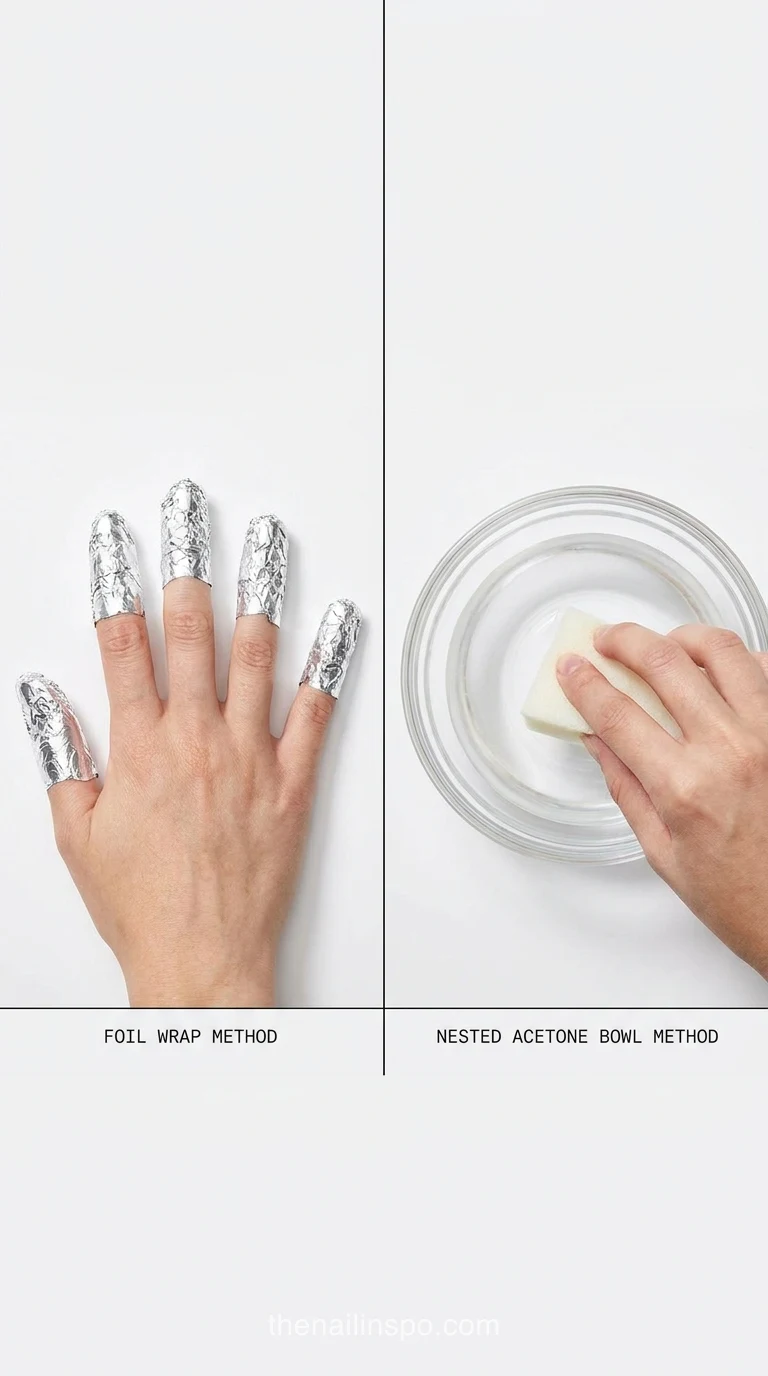
The warm bowl wins, and it isn’t close. Most guides tell you to wrap all ten fingers in acetone-soaked cotton and foil for 20 minutes, then scrape with a metal pusher. Static foil traps stagnant dissolved resin against the nail, so the solvent stops doing much long before the timer ends. Then the pusher meets a nail at its softest, and people blame the gouges on the dip.
| Method | How it performs | Risk to the natural nail | Verdict |
|---|---|---|---|
| Static foil wraps on all ten fingers | Acetone sits still and saturates, so product often needs a second round. | High, mostly from metal scraping afterward. | Skip it. |
| Warm acetone bowl with sponge agitation | Moving solvent keeps fresh acetone on the resin; fastest home option. | Low with wood tools and one-nail-at-a-time wiping. | My pick for most people. |
| Salon removal | A tech files off most bulk before soaking, so results are consistent. | Depends on the tech’s e-file control. | Worth it when you’re getting a new set the same visit. |
| Peel-off base coat, set up beforehand | No acetone; the set releases in warm water. | Low, though wear time is shorter. | Best if you change designs weekly. |
One thing the table can’t show is your skin. The bowl method keeps fingertips in acetone for several minutes, so if the skin around your nails is already cracked or irritated, I’d book a salon removal and skip the home soak entirely.
Salon Removal Cost vs DIY in 2026
A 16 fl oz bottle of pure acetone retails for about $3.48, and a standalone salon removal costs $12.00 to $22.00 per service. DIY pays for itself the first time. I’d still pay a salon in two situations: the set has cracked down into the natural nail, or you’re booking a fresh set anyway, in which case ask whether removal is already included.
Can You Remove Dip Nails Without Acetone?
Not an existing set, realistically. Non-acetone removers, usually based on ethyl acetate, are too weak to break down dip resin in any reasonable time, and plain warm water only lifts the edges unevenly. The acetone-free route starts before the set goes on: brush a water-based peel-off base coat in a thin stripe down the length of the nail, then dip as normal. After 5 to 7 days, the enhancement pops off in warm water. You trade wear time for it, so it suits weekly design changers, not anyone who wants three weeks out of a set.
 Read NextHard Gel vs Acrylic: Which One Is Best for You?
How to Remove Dip Nails at Home, Step by Step
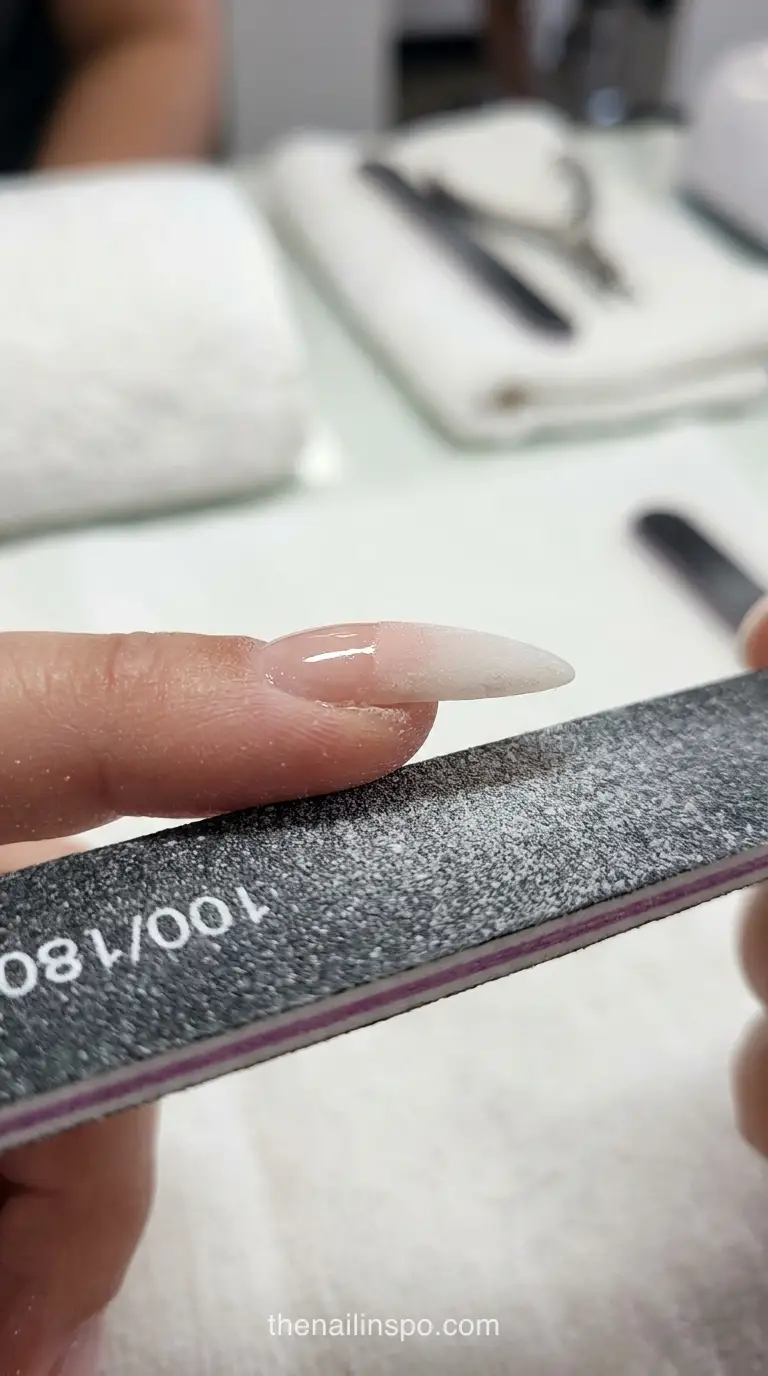
Six steps take a full dip set off without scraping, and none of them needs salon equipment. If it’s your first time, do one hand per round so the other stays free for wiping.
Step 1: Break the Seal With a 100 Grit File
File the shiny top coat off every nail with the 100 grit side until the whole surface looks matte and dusty. Leave the color layers in place. Switch to the 180 side near the cuticle and sidewalls, and stop before you feel heat.
Step 2: Set Up an Indirect Warm Bath
Fill a large bowl with hot tap water and confirm with a thermometer that it’s below 130°F. Pour enough 100% acetone to cover the nails into a smaller glass or ceramic bowl and stir in one teaspoon of jojoba or coconut oil. Then set it inside the water bowl, with a window open and any flame or heat source well away.
Step 3: Soak and Agitate on a Sponge
Drop a piece of new dish sponge into the acetone and rub the nails against it in slow circles, keeping them submerged. A zip-top bag holding acetone and a textured towel works the same way. Keep going until the color looks soft and gummy rather than chalky.
Step 4: Work One Nail at a Time
Lift one finger out and wipe the softened product off with a lint-free pad before it dries. That finger goes straight back in. Don’t pull the whole hand out to inspect it; repeat finger by finger until the color is gone.
Step 5: Lift Residue Without Metal
Ease any remaining patches off with an orangewood stick or silicone pusher held flat, pushing toward the free edge. If a patch won’t move, give that nail another minute in the bath instead of forcing it.
Step 6: Rehydrate and Wait Before Reapplying
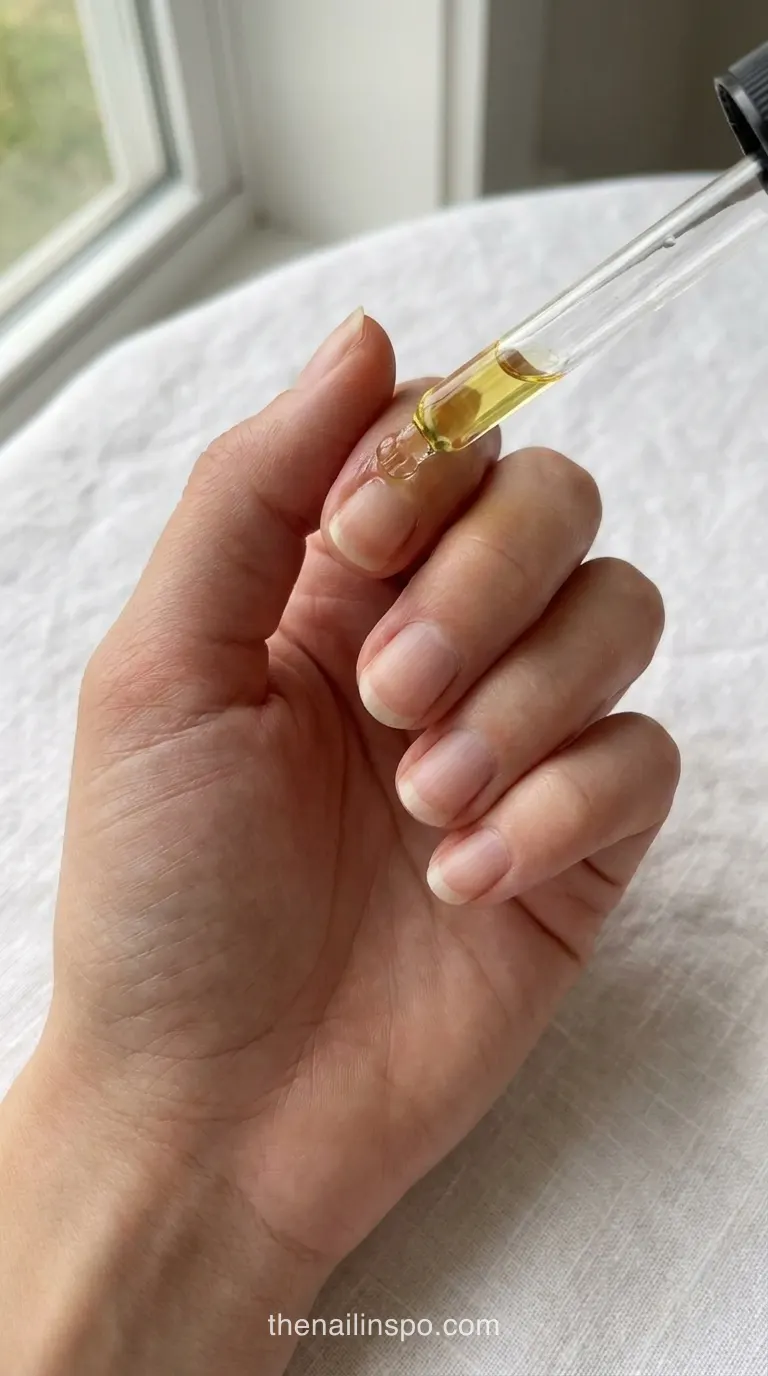
Wash your hands with mild soap, then massage cuticle oil into the nails and surrounding skin. Give the nails a day or two to firm up before you file a new shape or apply anything new.
Sophia Beed’s note: Techs I work alongside report that pulling every nail out of the solvent at once, whether from foil or a bowl, lets dissolved resin re-crystallize within seconds as the acetone evaporates. That’s why step four feels fussy. It’s still faster than redoing the soak.
 Read NextNail Apex Placement: 6 Best Steps for the Perfect Set
Dip Powder Won’t Come Off? Fixes That Protect the Nail
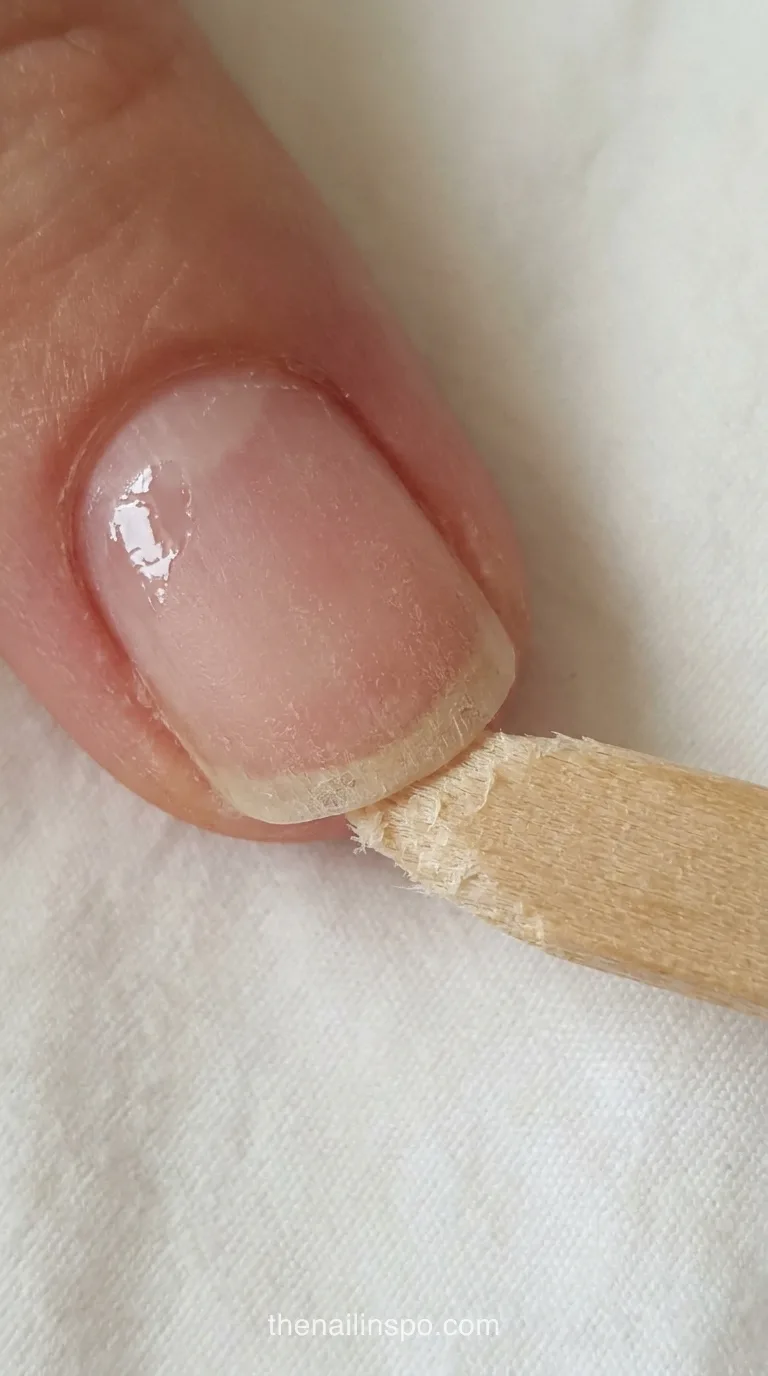
Stubborn dip almost always means one of two things: top coat survived in patches, or the acetone went cold. Look for shiny spots on the softened nail, because that’s where the seal held. File just those spots with the 180 side, refresh the hot water, and go back in. Twenty more minutes on an unfiled nail won’t do what thirty seconds with a file will, and it’s the habit I drill hardest when I teach.
Nail Damage After Dip Removal: Signs and Fixes
Chalky white patches right after removal are usually dehydration from the acetone, and they tend to fade after a day or two of regular oiling. Grooves or thin spots that bend easily are different. That’s mechanical damage from scraping or overfiling, and it grows out rather than buffs out, so filing it smooth only thins the nail further. Keep the length short and oil daily while it grows. If the skin around a nail is cracked or painful, ask a pharmacist or doctor, not a nail blog.
Mistakes That Make Dip Re-Harden
Letting the bath cool is the big one. Hot tap water loses heat within minutes, and cooler acetone softens resin far more slowly, so top up the outer bowl with fresh hot water halfway through and check it with the thermometer again. The other mistake is stopping the agitation to check your phone. A soak with no movement is basically the foil method in a nicer bowl.
Recommended for you- November nail ideas for your next set: fresh fall designs to plan once your nails have recovered
- Thanksgiving nail designs: holiday looks to book once your nails are back to strength
Frequently Asked Questions About Taking Off Dip Nails
Can I reuse acetone after removing dip nails?
I don’t. Once it has dissolved a full set, the acetone is loaded with resin and powder, so it works slower the second time and can leave a sticky film. Start each removal with a fresh batch. Don’t pour used acetone down the drain; check your local household hazardous waste guidance, since disposal rules vary by city.
Should I use an electric nail file to remove dip at home?
Not unless you’ve been trained on one. An e-file takes bulk off fast, but untrained hands tend to press too hard or linger in one spot, which builds heat and can cut rings into the natural nail. A 100 grit hand file is slower and far more forgiving, and that’s the trade I’d make at home.
Is dip harder to remove than gel polish?
Usually, yes. Soak-off gel polish is a thin layer designed to break down in acetone, while a dip set stacks several layers of resin and powder, often built thicker at the apex for strength. That bulk means more filing and a longer soak. Hard gel and builder gels that aren’t labeled soak-off are different again and generally have to be filed off.
Can I just peel off dip nails that are already lifting?
I’d leave it, even when a corner is begging. Dip bonds to the top layers of the nail plate, so peeling tends to take a sheet of nail with it and leaves thin, bendy spots. Clip any snagging edge short and plan a proper acetone removal within a day or two.
Before the next set goes on, check your nails in daylight and note any thin or white areas, because that’s where your next removal needs the lightest file pressure. If you’re weighing a different system altogether, our guide to liquid gel nails is the place to start. And keep the acetone capped tight between uses; it evaporates fast enough that an open bottle won’t be full by your next removal.
Comments (0)
No comments yet. Leave a thought below!