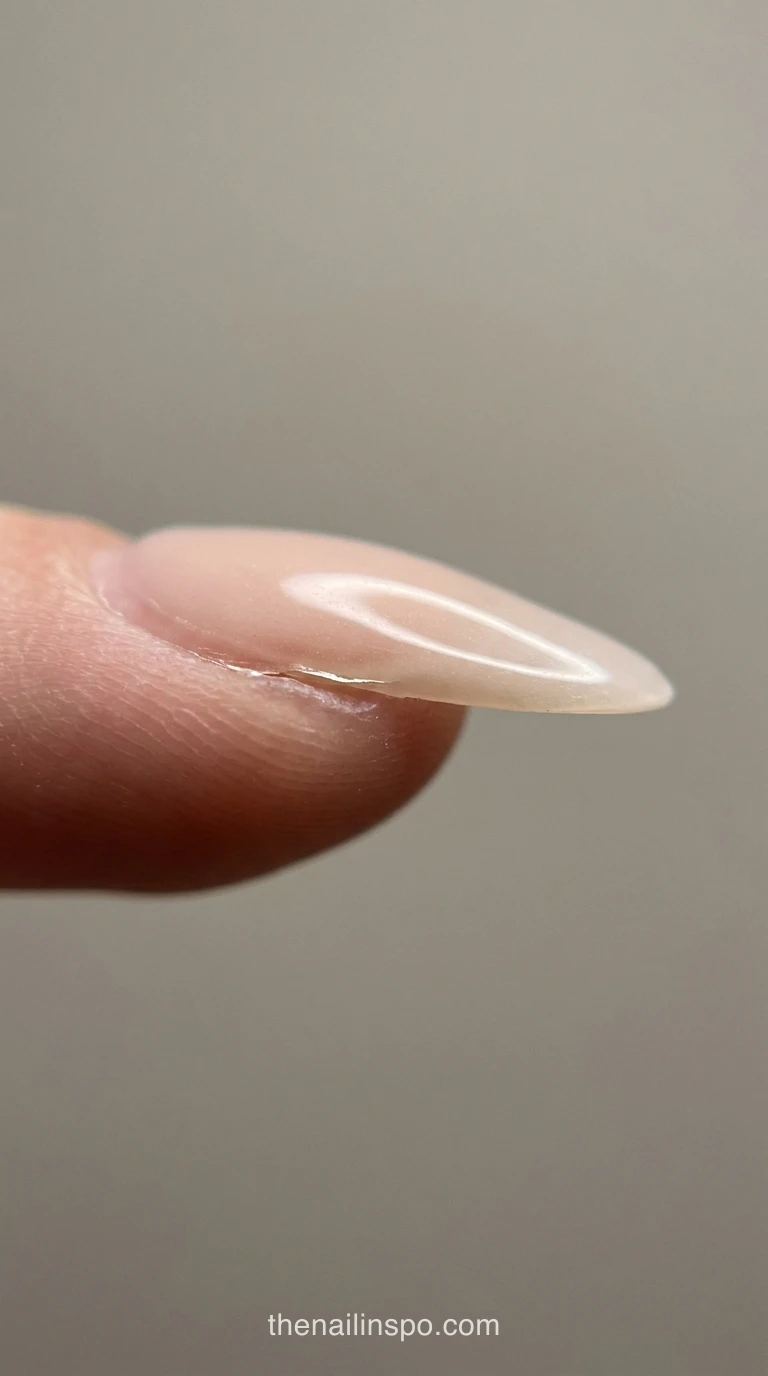
Dip powder lifting at cuticle almost always comes down to two causes: product that touched skin, or a nail plate that was wet or chemically treated when the base went on. Fix both and most sets hold until they grow out. The fix that lasts is a dry prep, a hairline gap at the cuticle and sidewalls, a base kept to the middle of the nail, and edges filed flush. I’m Sophia Beed, a London nail technician and educator with more than nine years of salon work, and this is the sequence I teach.
Key takeaways- Dip that lifts at the cuticle within the first few days has usually failed at prep, not because of the powder.
- A 1 mm hairline gap between the base coat and the cuticle and sidewalls removes the edge that peels first.
- Keeping the first base layer to the center three-quarters of the nail builds the apex where stress sits and keeps the perimeter thin.
- Technicians link water soaking and chemical cuticle softeners to full overlay detachment within 48 to 72 hours.
- Gel over dip needs an unbuffed 180-grit surface, and buffing the dip smooth first is the usual reason gel peels within two days.
Why Dip Powder Lifting at Cuticle Starts in the First 72 Hours
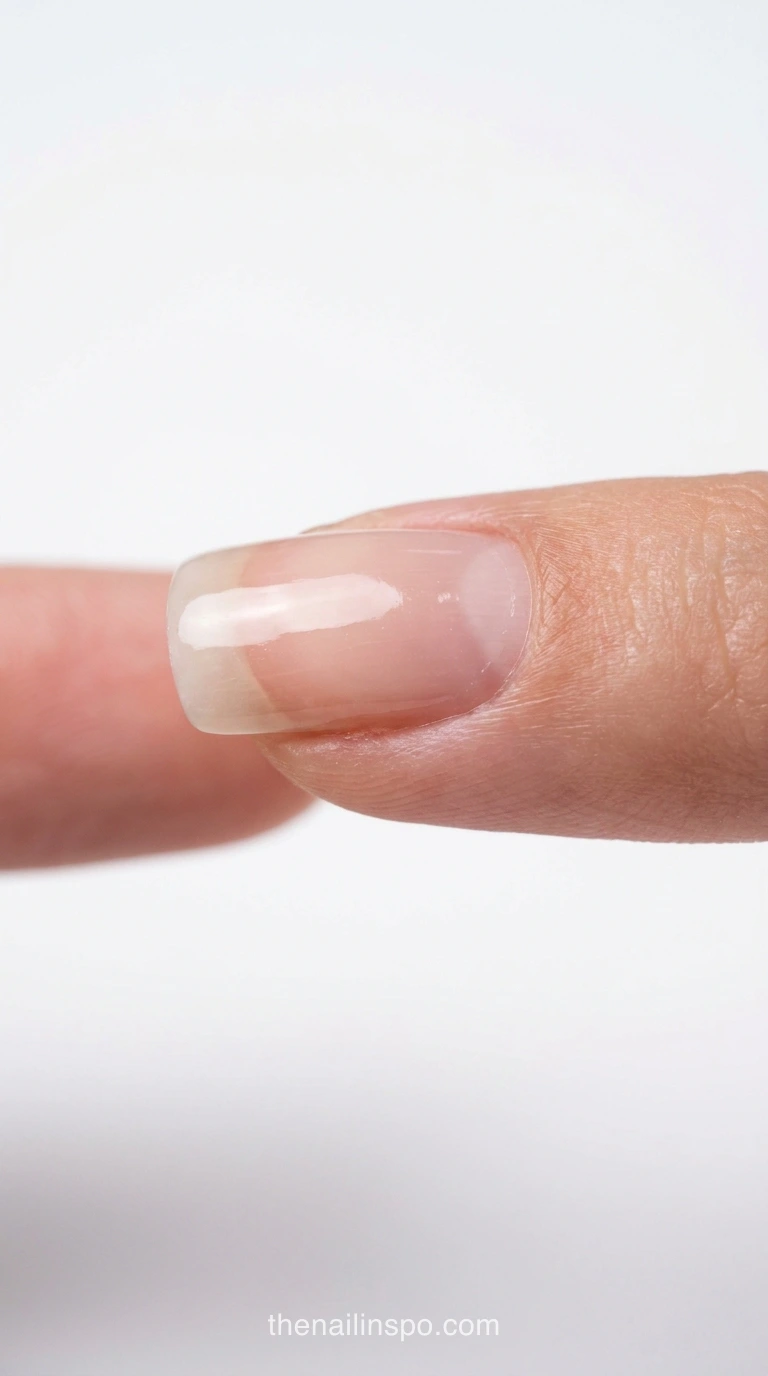
Dip lifts at the cuticle when the base coat bonds to something other than clean, dry nail plate: skin, cuticle tissue, oil, water, or softener residue. The margin at the proximal nail fold is the thinnest and most flexed part of the overlay, so it’s the first place a weak bond lets go.
Timing tells you which failure you’ve got. A set that comes off in a sheet early on failed at prep. A set that starts catching at the cuticle line later in the wear usually failed at placement, either because product sat too close to the fold or because the perimeter was too thick to flex with the nail.
Why Is My Dip Powder Lifting So Fast?
Lifting within the first few days points at the plate, not the powder. If the nail was soaked or treated with a softener, the base never gripped properly, and ordinary hand use finishes the job. I don’t blame a brand until I’ve ruled out the sink.
Dip Coming Off After Two Days: What It Signals
If what’s peeling at day two is a clear, flexible film rather than colored dip, that’s the gel top coat letting go, not the dip itself. It’s an adhesion problem between gel and dip, and it’s almost always about surface texture.
If the colored overlay comes away whole, go back to prep. The bond to the natural nail never formed.
Sophia Beed’s note: When a client tells me the whole overlay came off in one piece, I stop asking about the powder and start asking what happened before the appointment. A long bath or a soak somewhere else changes the plate more than people expect.
 Read NextWhy Do Acrylic Nails Lift? 6 Secrets to Stop It Now
Dip Nails Lifting: Prep Errors vs Application Errors
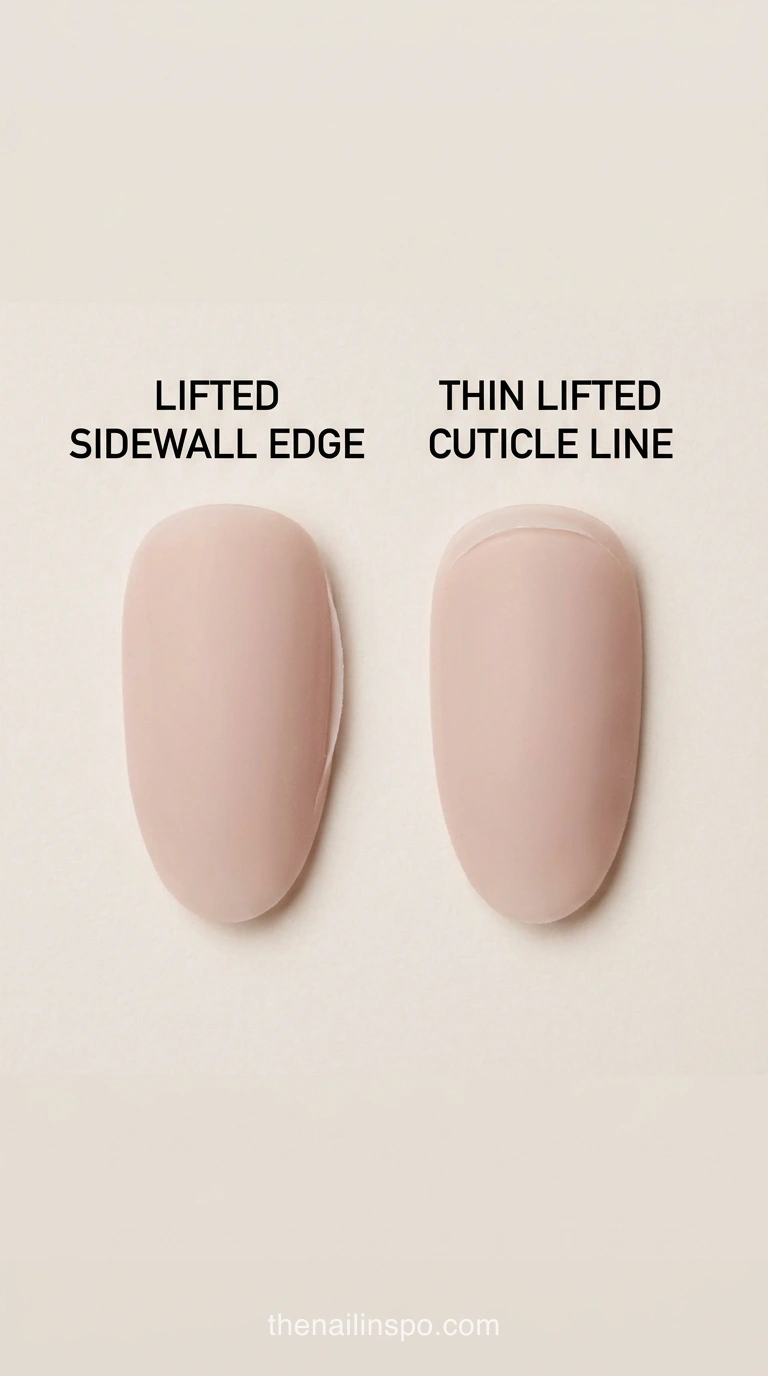
Prep errors make the overlay fail early and all at once. Application errors make it fail later, at one edge. That split matters because most people react to lifting by switching powders, which fixes neither.
| Cause | What you see | When it shows up | Verdict and fix |
|---|---|---|---|
| Soaking or chemical cuticle softener before the base | The whole overlay loosens, often starting at the cuticle, and can come off in one piece | Within the first few days | Prep failure. Switch to a fully dry prep (Step 1) and never dip on a day you’ve used a softener. |
| Base coat touching the proximal nail fold | A thin line catches at the cuticle and widens as the nail grows | Later in the wear, as regrowth exposes it | Placement failure. Hold a hairline clearance from the fold (Step 3). |
| Product flooded into the sidewalls | Side edges lift and snag on hair or fabric | Early, once hands start getting wet and flexing | Placement failure. Keep the same gap at both sidewalls and the perimeter layers thin (Step 3). |
| Thick or square perimeter left after filing | A visible ledge where dip meets nail, which catches and lifts | As soon as the ledge starts taking knocks | Finishing failure. Bevel the edge flush with the natural nail (Step 5). |
| Activator rushed or wiped too early | Soft, dull patches and edges that peel or chip | During the first days of wear | Curing failure. Give the first coat a full air cure before the second (Step 4). |
If two rows describe your nails, fix the prep row first. A perfect apex won’t save a base that’s sitting on a swollen plate.
Lifting at Sidewalls vs Lifting at the Cuticle
Sidewall lifting usually comes from product flooding into the side groove, or from an edge that was filed thick and left square. Cuticle lifting is more often a clearance or residue problem. I’d argue sidewalls are the easier fix: you can see them while you work, whereas the proximal fold hides under cuticle tissue unless you check from a side angle.
The Prep Mistakes I Still Correct Every Week
These are the four I correct most often when I teach: soaking before a dip set, flooding base into the nail fold for “full coverage”, buffing the natural plate harder than it needs, and wiping the activator before it has cured. None of them shows on day one. Every one of them shows before the set grows out.
Dip Powder Prep and Application That Stops Lifting
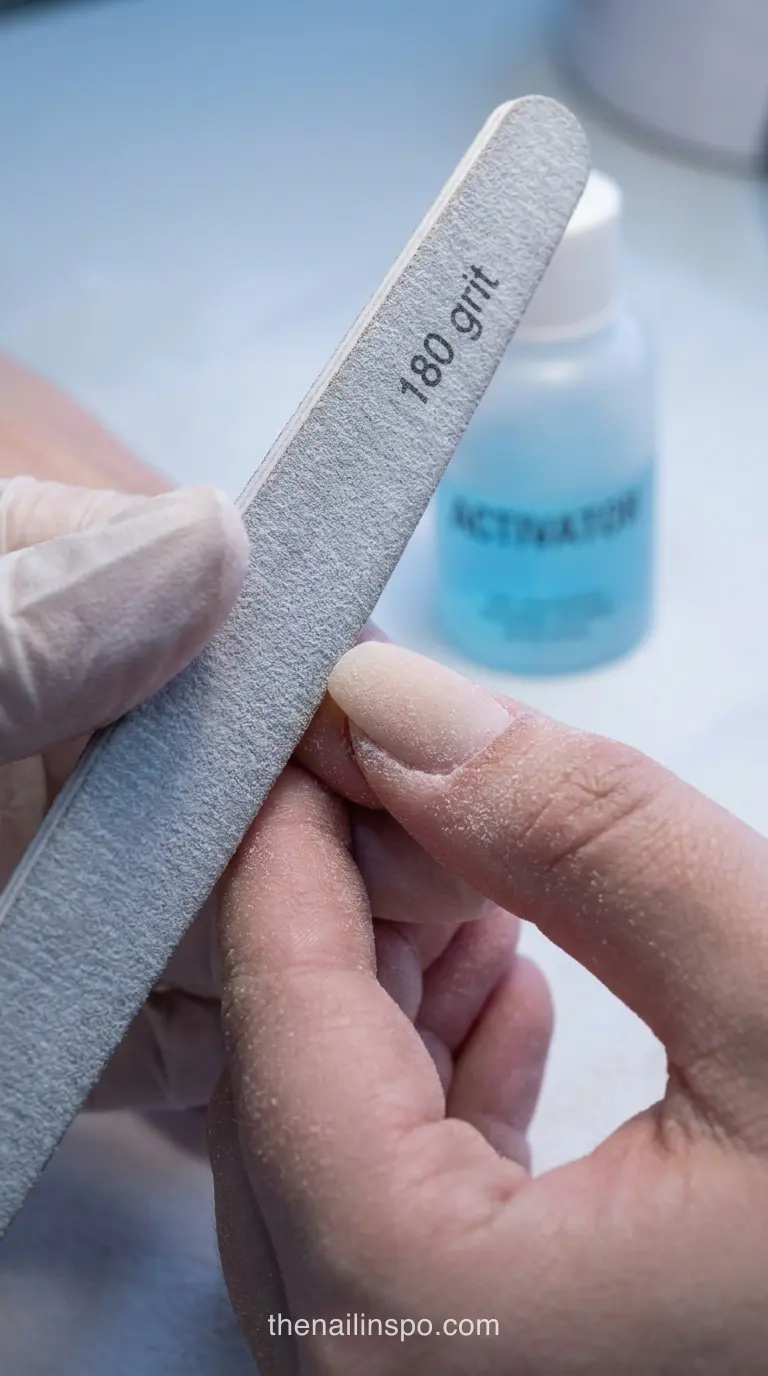
A dip set that lasts is built on a dry plate and kept off the skin. These five steps are the order I use on every client, and the numbers in them are the ones I won’t compromise on.
Step 1: Dry Prep Without Soaking or Softeners
Push back and lift the cuticle with a pusher on a completely dry nail. Skip the soaking bowl and skip chemical cuticle softeners entirely, and don’t dip on a day you’ve already used one. The plate needs to be dry and residue-free when the base goes on.
Step 2: Buff the Natural Plate With a 240-Grit
Buff the natural nail plate with a 240-grit buffer to remove the shine, not to thin the nail. Coarser grits aren’t needed here and take more plate than the bond requires. Brush away every trace of dust before the base.
Step 3: Base Coat With a 1 mm Cuticle Clearance
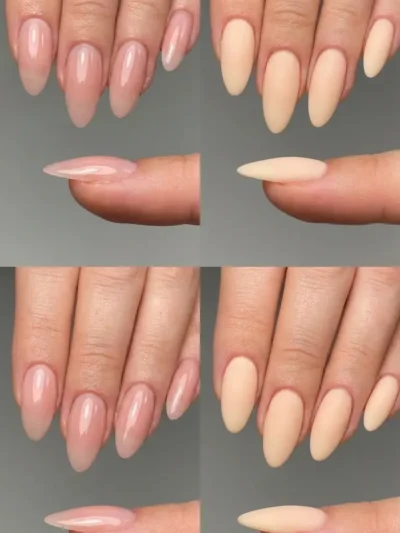
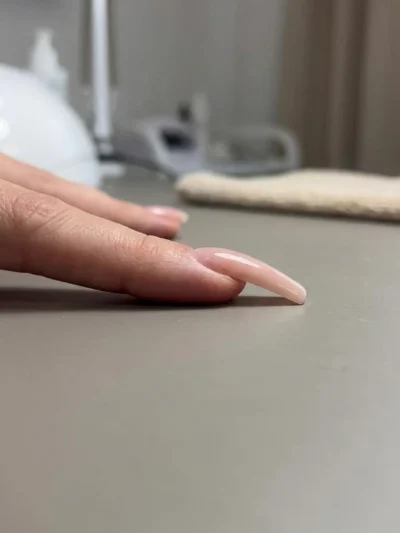
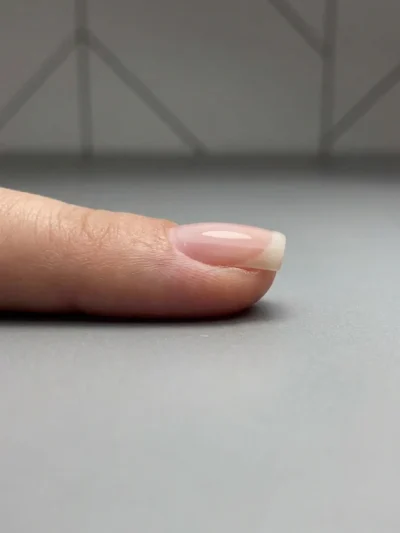
Apply the dip base coat with a strict 1 mm hairline clearance from the proximal nail fold and both sidewalls. Confine the first layer to the center three-quarters of the nail plate so the apex builds internally and the perimeter margins stay thin, then dip. Wipe and restart any nail where the base touches skin.
Step 4: Dip Activator Timing: 120 Seconds, Then Wipe
Apply the activator and let the first coat air cure for 120 seconds, until the surface clicks when tapped. Follow with a light second coat, then give the nail a firm dry wipe after 1 to 2 minutes.
Sophia Beed’s note: Don’t trust the clock alone. Tap the surface with a fingernail. A clear click means the first coat is ready. If it sounds dull or feels soft, give it longer before the second coat, whatever the timer says.
Step 5: Bevel Cured Edges Flush at 45 Degrees
Once cured, file any edge where the dip meets the natural nail flush with a 180-grit file held at a 45-degree angle. The goal is no ledge at all at the cuticle or sidewalls, because a ledge is where lifting starts.
 Read NextHard Gel vs Acrylic: Which One Is Best for You?
Gel Top Coat Over Dip in 2026: What Actually Holds
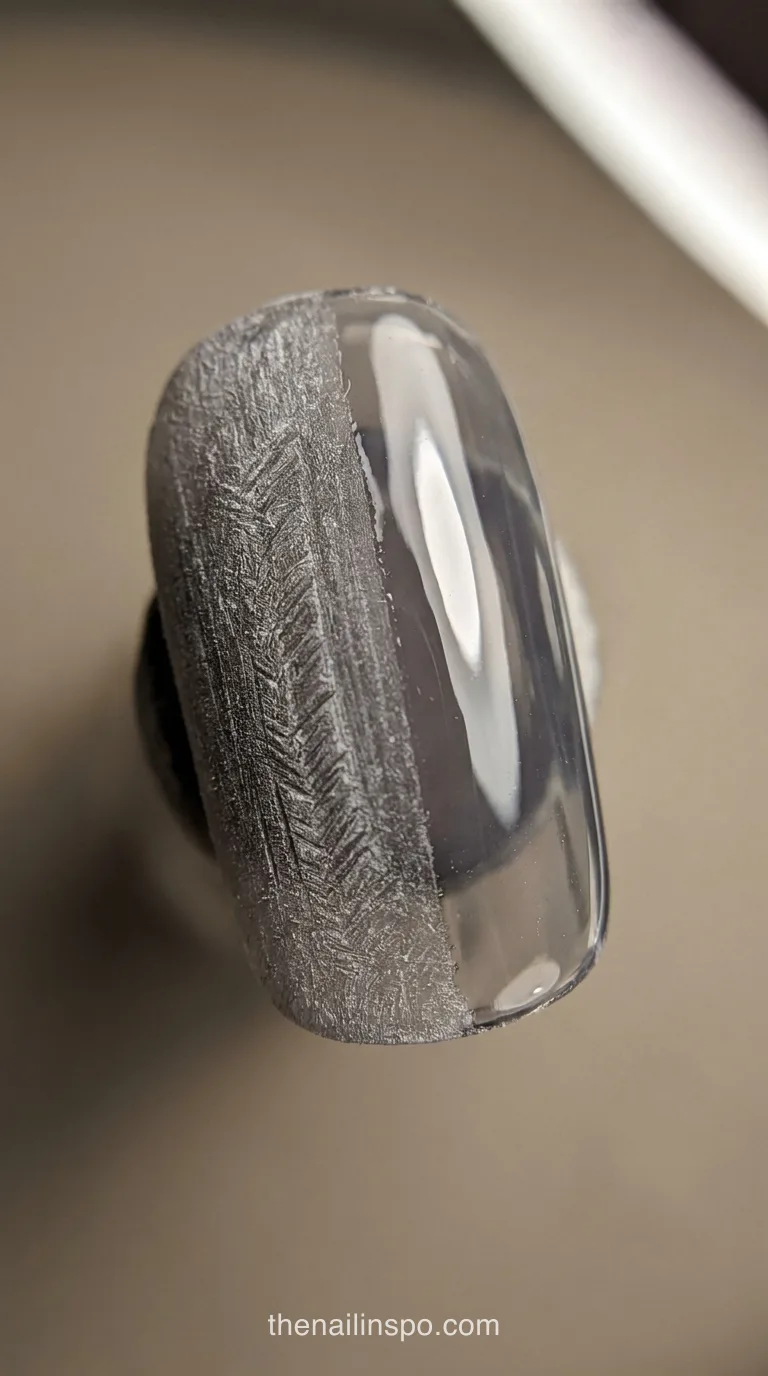
A gel top coat over dip holds when it goes onto cured dip that’s been filed with a 180-grit and left unbuffed. Without that texture, users consistently report the gel peeling away within about two days. The glassy finish is the appeal. The catch is that gel grips mechanically, and smooth dip gives it nothing to hold.
How Cyanoacrylate Bonds Fail When the Plate Swells
Dip base coats are cyanoacrylate adhesives, the same chemical family as nail glue, and they cure on contact with moisture and alkaline traces. So a soaked or softener-treated plate causes trouble in two ways. The base can start setting before it has properly wetted the surface, and the plate swells with water, then shrinks back as it dries, pulling against the bond. Many cuticle removers are alkaline, which is the residue problem in one sentence. Technicians report total overlay detachment within 48 to 72 hours after either. My read on the mechanism is a practitioner’s, not a lab result, but the pattern is consistent.
Should You Buff Dip Smooth Before Gel?
No. Most ranking guides tell you to buff dip smooth and then add gel, and that’s the step I’d cut. Buffing polishes away the scratch pattern a 180-grit leaves, and that pattern is what the gel locks into. Refine with the 180 and apply the gel straight over that texture once the dust is gone. If you want a buffed, glassy look without gel, use your dip system’s own top coat instead.
Recommended for you- How to remove dip nails at home: the clean way to restart a set that has already lifted.
- More nail anatomy and filing guides on The Nail Inspo: apex, grit and prep technique from the same bench.
Dip Powder Peeling at Cuticle: Your Questions Answered
How long should dip nails last before lifting?
Most dip systems are sold on two to four weeks of wear, and a well-prepped set should reach the point where regrowth, not lifting, is the reason you take it off. If yours lifts long before it grows out, treat that as a technique signal rather than normal wear. Fast-growing nails and hands that are in water all day will shorten that window, and that’s expected.
How do I fix lifting dip nails at home without redoing the set?
Honestly, you mostly can’t. Once dip has lifted, there’s usually water or debris under the edge, and gluing it back down seals that in. For a tiny lift at the free edge or a sidewall, carefully file the loose product away and re-seal. For anything at the cuticle, remove the set properly and start again; our guide on removing dip nails at home walks through it.
Is a salon dip manicure worth it over an at-home kit?
In 2026 a basic salon dip manicure runs about $40 to $80, while a complete at-home starter kit starts around £23.79 ($30). If your sets keep lifting and you can’t tell why, book one salon set and watch how close the tech works to your cuticle. If your prep is already dry and your clearance is clean, the kit pays for itself on the first set.
Can I use cuticle oil with dip nails?
Yes, once the set is finished. Oil is a bond-breaker during application, so keep it off the plate on the day you dip and skip oily hand cream beforehand. After the top coat has cured, daily cuticle oil keeps the surrounding skin flexible, which is kinder to the overlay than dry, cracking skin pulling at the edge.
Is lifting dip powder bad for the natural nail?
Lifted product can hold water and debris against the nail plate, which is why I’d remove a lifted set rather than wear it out. I can’t assess an individual nail from an article, so if you see discoloration or soreness under lifted dip, have it looked at by a qualified professional before applying anything new.
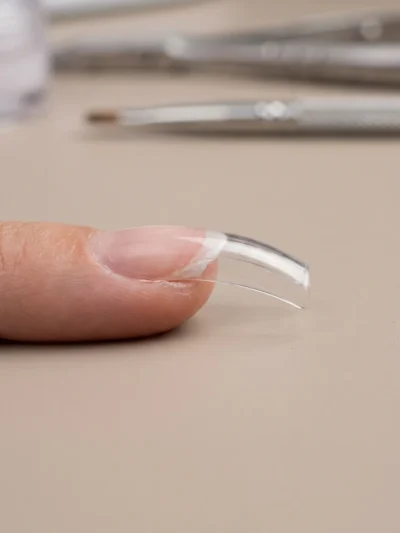
On your next set, add one check before the powder goes on: look at each nail from the side, under a bright light, right after the base. You should see clean nail between the base and the cuticle, and between the base and each sidewall. If base has touched skin anywhere, wipe that nail and start it again. It’s the cheapest correction in the whole service, and the one most people skip.
Comments (0)
No comments yet. Leave a thought below!