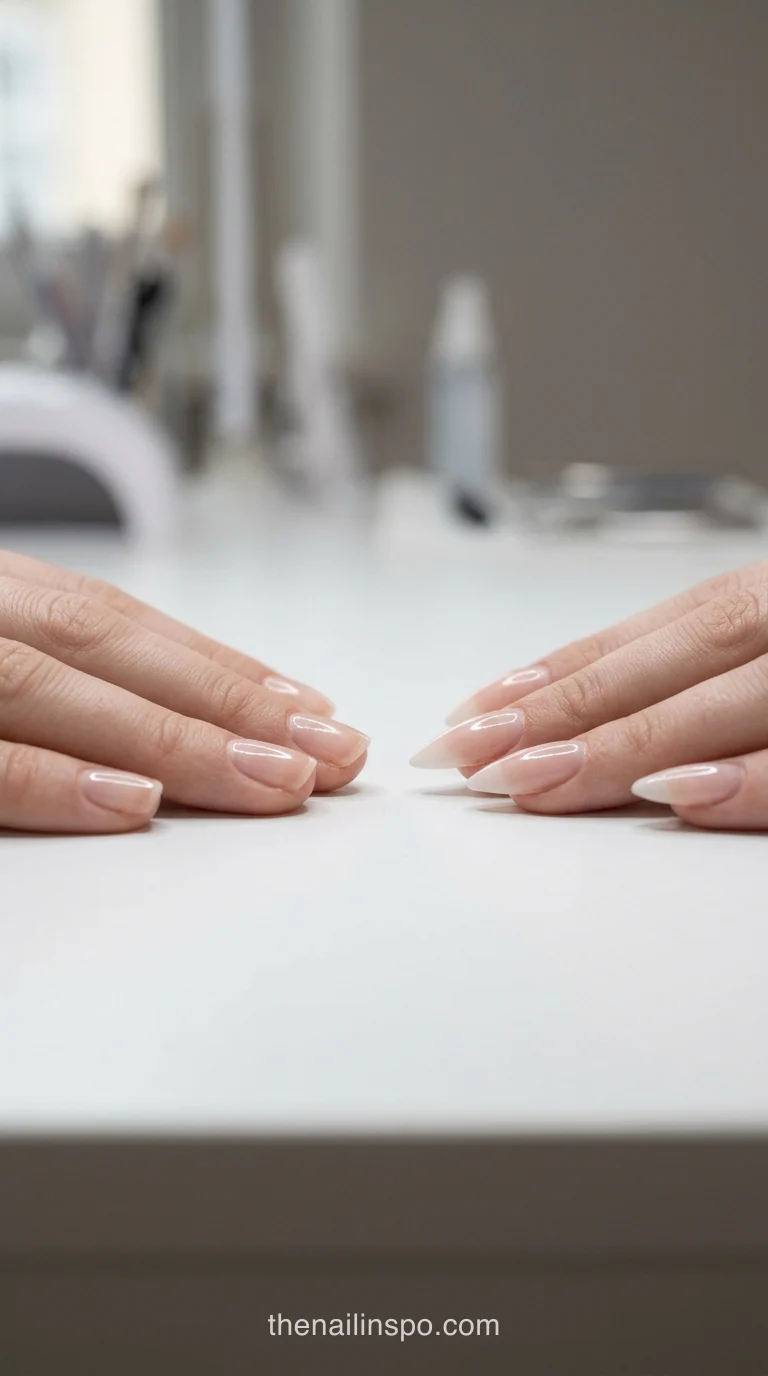
Neither liquid builder gel nor hard gel inherently lasts longer on the calendar, as natural nail growth dictates rebalance schedules every 2.5-3.5 weeks. However, hard gel offers superior rigidity for strong nails and long extensions, while builder gel’s flexibility better suits thin, bendy nails, preventing cracks or pop-offs.
Key takeaways- Liquid builder gel and hard gel share the same 2.5 to 3.5 week service life, set by nail growth rather than product strength.
- Rigid hard gel tends to fail early on thin, flexible natural nails because stress concentrates at the bond line.
- Most premature lifting traces back to surface prep, especially buffing the nail too smooth instead of etching it.
- Builder gel soaks off in acetone, while cured hard gel has to be filed off.
Liquid Gel vs Hard Gel Nails: Which One Actually Lasts Longer?
Neither outlasts the other in any way that matters to your booking schedule. Either overlay can stay bonded past three weeks, but the nail underneath keeps moving. As it grows, the structure you paid for drifts toward the free edge and turns into a lever. The real question is which system survives that lever on your particular nail.
How Long Does Hard Gel Last Between Fills?
Hard gel lasts 2.5 to 3.5 weeks between fills, and builder gel lasts exactly as long. That window comes from biology, not chemistry. Past it, the regrowth at the cuticle has no support. I rebook every client in that window no matter which gel is on their nails.
Why Both Need a Rebalance at Three Weeks
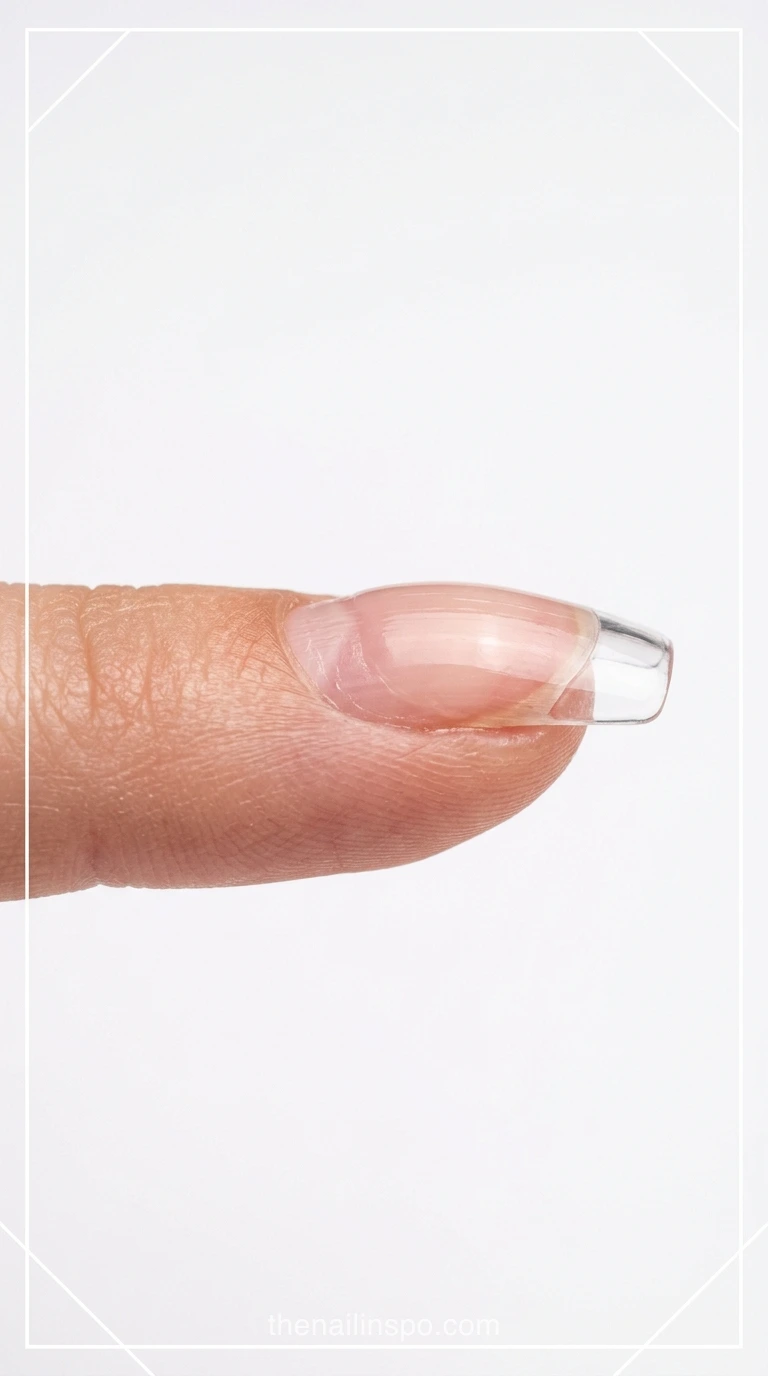
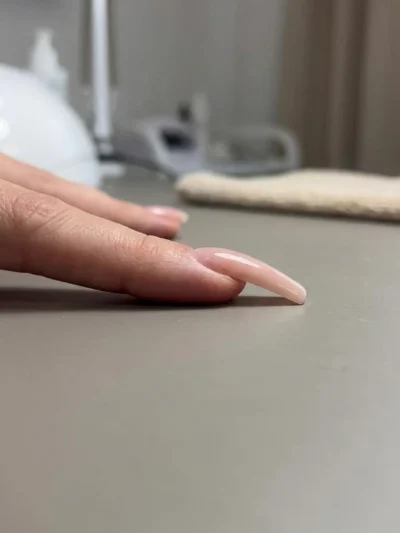
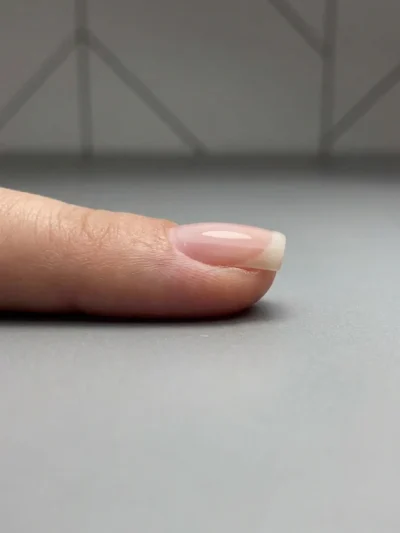
The apex migrates. It gets built over the stress point, where the nail bends most, but growth pushes it forward a little every day. By week three it sits out toward the free edge, and every knock now levers against the thinnest part of the build.
So when a competitor says hard gel “lasts a week longer,” they’re describing adhesion, not wear. The product might hold. The shape won’t, and stretching to week five on either system is how a lift turns into a snap.
 Read NextWhy Do Acrylic Nails Lift? 6 Secrets to Stop It Now
What Are the Key Quantitative Differences Between Hard Gel and Builder Gel?
| Metric | Value | Reference / Industry Baseline |
|---|---|---|
| Hard Gel Shore D Hardness | 85-90 | MMM Beauty |
| Builder Gel Shore D Hardness | 80-88 | MMM Beauty |
| Hard Gel Elongation | 2-4% | MMM Beauty |
| Builder Gel Elongation | 5-12% | MMM Beauty |
| Builder Gel Viscosity | 5,000-15,000 cP | MMM Beauty |
Hard Gel vs Soft Gel: Cost, Removal and Real-World Wear
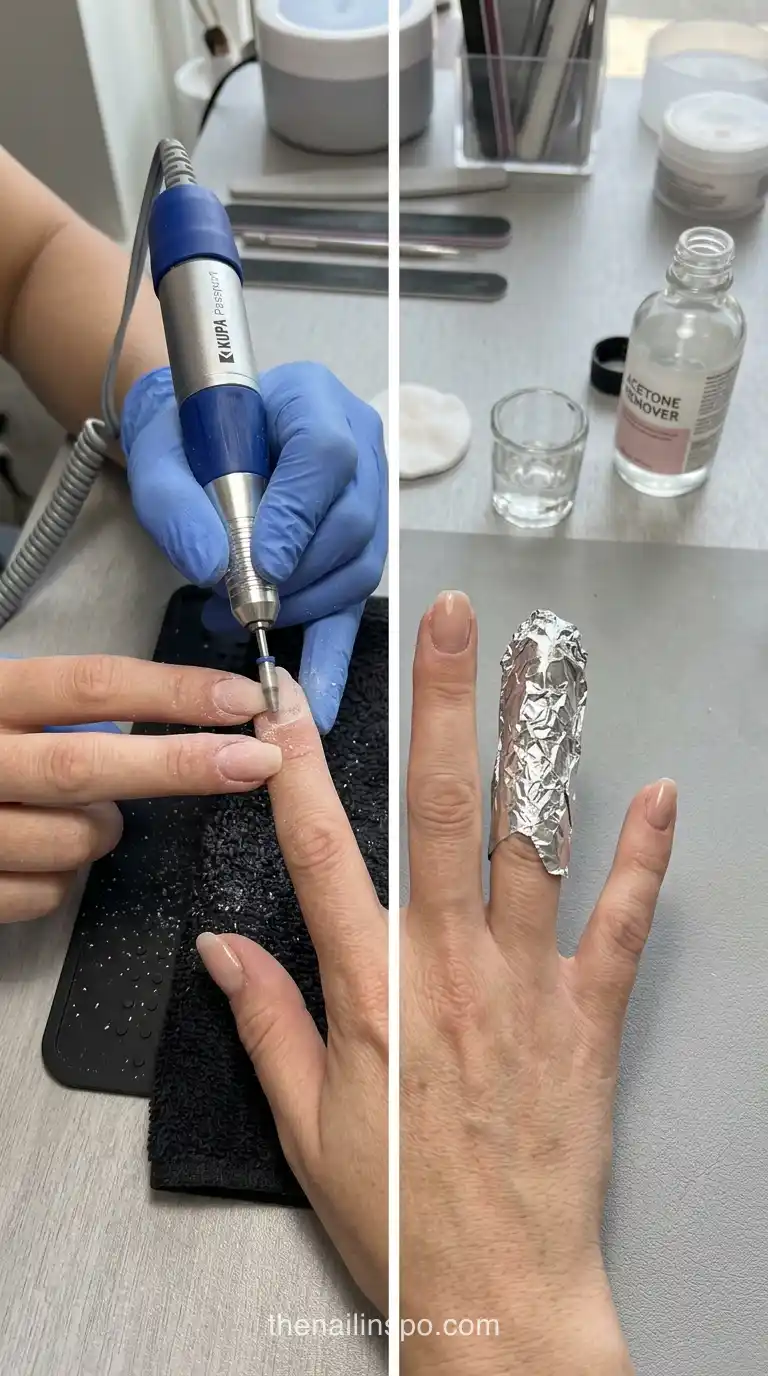
Soft gel is the trade term for soak-off systems, builder included; hard gel is the file-off category. They wear differently mostly because one bends and one doesn’t, and that difference decides which nail each one suits.
| Factor | Builder gel | Hard gel | Verdict |
|---|---|---|---|
| Behavior under flex | Gives slightly as the natural nail bends, so the bond takes less shock. | Stays rigid and transfers every bend straight to the bond line. | Builder gel wins on any nail that visibly bends. |
| Typical failure | Lifting at the cuticle or sidewall, almost always from prep. | Cracking at the stress point or clean delamination from the plate. | Builder gel fails more forgivingly and is easier to patch. |
| Surface toughness | Can dent or scuff with heavy daily wear. | Very hard, scratch-resistant finish once cured. | Hard gel wins for clients rough on their hands with strong nails. |
| Length and sculpting | Best as an overlay or for short to medium extensions. | Holds long sculpted extensions on forms with a thin, crisp C-curve. | Hard gel for long sculpted sets on sturdy nails. |
My unpopular take: hard gel gets sold as the premium upgrade far too often. Most nails I see in London are thin rather than strong, and on those, builder gel is the better product, not the budget one.
Soak-Off vs File-Off Removal and Your Nail Plate
Builder gel soaks off in acetone after the top layer is filed back; cured hard gel does not dissolve and has to be filed off. File-off removal isn’t damaging in itself, but careless e-file work thins the natural plate fast. That’s why I’d rather file hard gel down to a fine base and rebalance than strip it completely every visit.
How Much Do Hard Gel Nails Cost in 2026?
A full sculpted hard gel set costs around $70 to $100 in the US and takes 75 to 105 minutes. In the UK, expect roughly £56 to £75. A liquid builder overlay in the US averages $65 to $90. UK builder prices vary too much between salons to quote fairly. Either way, the premium on hard gel pays for sculpting time, not extra weeks.
 Read NextHard Gel vs Acrylic: Which One Is Best for You?
What Technical Terms Define Gel Nail Properties and Application?
Understanding gel nail properties involves key technical terms. Hard gel, for instance, exhibits a high Shore D hardness and low elongation, indicating its rigid structure. In contrast, builder gel, often referred to as BIAB (Builder in a Bottle), offers more flexibility with a lower Shore D hardness and higher elongation. Application techniques like building an apex over the nail’s stress point are crucial. The curing process relies on photoinitiators like TPO or BAPO, which react to UV LED lamps, forming a cross-linked network. Proper prep, including using a 180 grit file, prevents issues like modulus mismatch and lifting.
Hard Gel Cracking on Thin Nails: Why Flexibility Wins
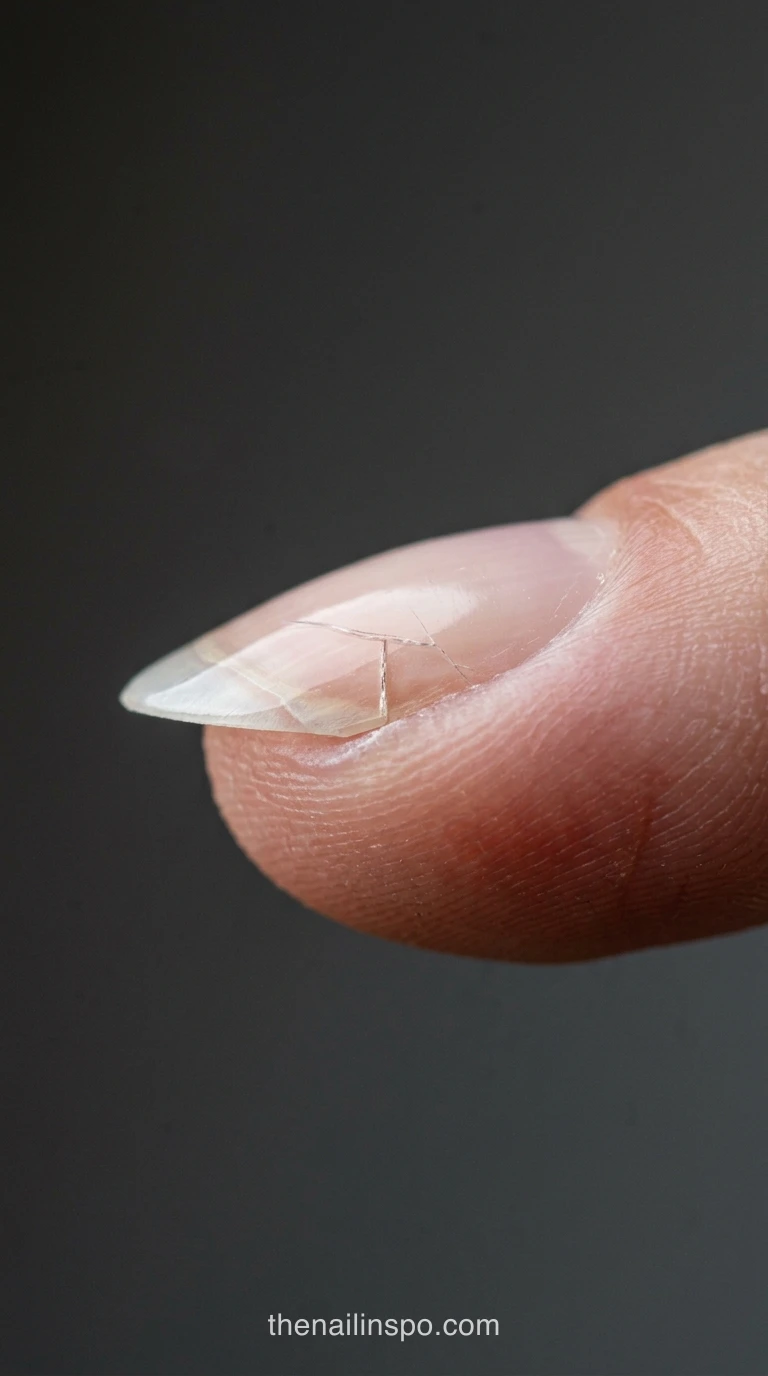
Put rigid hard gel on a thin, hyper-flexible nail and it usually fails at the bond line, not in the product. The nail bends every time you type; the overlay doesn’t. Technicians describe this as a modulus mismatch: two materials of very different stiffness glued together, with the shear stress concentrated exactly where they meet.
Is Liquid Gel Better for Weak, Bendy Nails?
Usually, yes. Builder gel’s slight flex lets it move with a bendy nail instead of fighting it, so less stress reaches the bond. My rule: if the free edge bends easily under light thumb pressure, I use builder gel. If it barely moves, either system works, and I choose based on the length and shape the client wants.
When Hard Gel Is Still the Right Call
Hard gel makes sense on strong, fairly flat nails, especially for long sculpted extensions on clients whose hands take a beating. What I won’t do is sculpt long hard gel onto a bendy nail because the client saw it online. It comes back broken.
Sophia Beed’s note: Before I choose a system, I flex-test every new client’s free edge. It takes five seconds and it has stopped more breakages in my chair than any product switch.
Gel Nail Lifting Starts at Prep: Make Either System Last
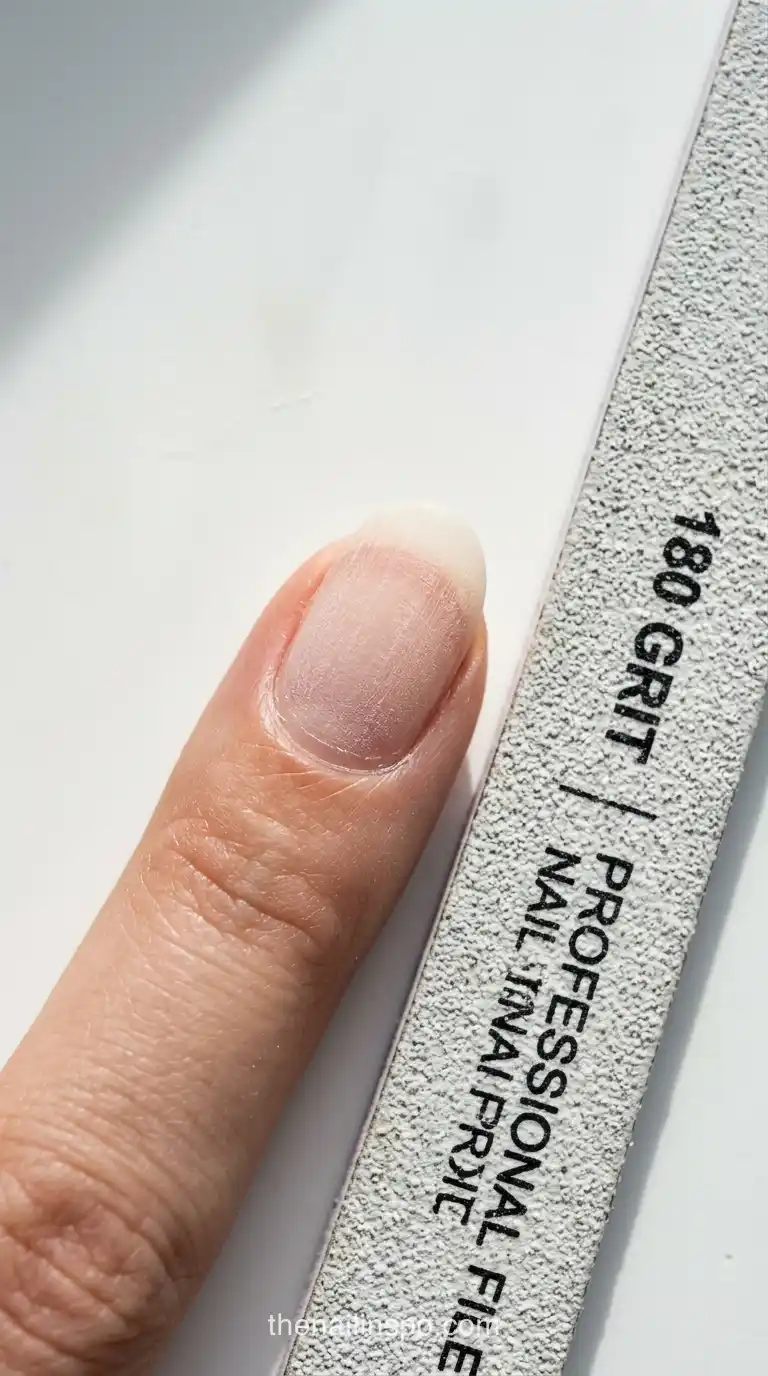
Most lifting is a prep failure, not a product failure. Technicians report that roughly 80 percent of premature lifting comes down to surface prep, and the most common error is buffing the plate too smooth. Switching to hard gel just moves that problem to a pricier set.
The Buffing Mistake Behind Most Lifting
A buffed, shiny nail plate looks clean, but it gives gel nothing to grip. Etching with a 180 grit creates a fine mechanical texture the first layer can lock into. The newer techs I train almost always over-buff at first, because smooth feels careful. Matte is the goal.
Step 1: Etch with a 180 grit
Work a 180-grit file or buffer across the whole plate in light, short strokes until every bit of shine is gone. Check the sidewalls and cuticle area, where shine hides and lifting starts.
Step 2: Dehydrate and prime
Brush away all dust, then apply a nail dehydrator and let it flash off. Follow with the bonder or primer your gel brand specifies. Mixing brands here is a false economy.
Step 3: Apply a thin slip layer and cure
Scrub a very thin first layer of gel into the plate, keeping it off the skin, and cure it. This layer is about adhesion, not structure.
Step 4: Build with correct apex placement
Float a bead of builder gel or pat hard gel in thin layers to build the apex over the stress point, roughly in the middle third of the nail. Keep the cuticle and free edge thin. Check side and top angles before curing; a misplaced apex can’t be filed right without thinning the build.
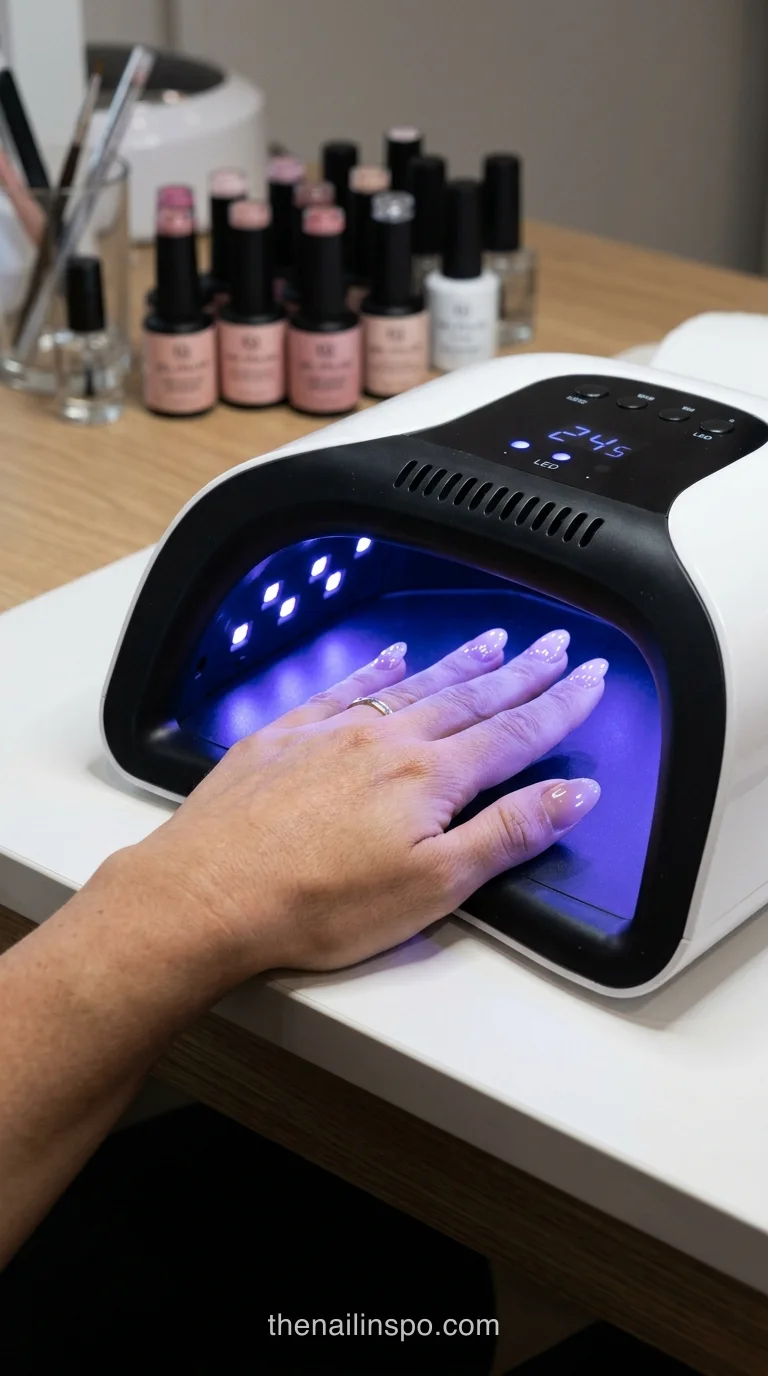
Step 5: Cure fully in a UV LED nail lamp
Cure for the full time the gel manufacturer lists, in a lamp that matches the gel’s photoinitiator. Then remove the inhibition layer and refine the shape, sealing the free edge as you go.
Sophia Beed’s note: If a set lifts in the first week, look under the lifted area before blaming the gel. A shiny patch on the natural nail there means the etch missed that spot.
How Does Hard Gel’s Intrinsic Durability Compare for Specific Lifestyles?
While rebalance schedules for both hard gel and builder gel are similar due to natural nail growth, hard gel is widely recognized for its superior intrinsic durability and rigidity. This makes it ideal for very long extensions or clients with extremely active lifestyles who are particularly hard on their hands. Its robust structure can significantly reduce product failures like cracks or breaks in these demanding scenarios, offering enhanced product integrity even if the fill interval remains consistent.
What Specific Metrics Define Hard Gel vs. Builder Gel Rigidity and Flexibility?
The physical properties of hard gel and builder gel can be precisely quantified. Hard gel typically exhibits a Shore D hardness of 85-90 with 2-4% elongation, indicating its rigid nature. In contrast, builder gel shows a Shore D hardness of 80-88 and a higher elongation of 5-12%, providing its characteristic flexibility. Builder gel also has a viscosity range of 5,000-15,000 cP, allowing it to self-level while building structure. These metrics highlight their distinct mechanical behaviors.
Why is Hard Gel Recommended for Active Lifestyles and Demanding Hands?
Hard gel is particularly well-suited for clients with active lifestyles or those who are consistently hard on their hands. Its inherent rigidity and superior strength provide robust protection against daily impacts, making it less prone to chipping or breaking under stress. This durability ensures that even with frequent exposure to demanding activities, the nails maintain their integrity for 3-4 weeks, offering a reliable solution for those requiring maximum resilience.
 Read NextNail Apex Placement: 6 Best Steps for the Perfect Set
TPO-Free Gel Formulas and What Changed After the EU Ban
Since September 1, 2025, Commission Regulation (EU) 2025/877 has prohibited TPO in cosmetic products sold across the EU. TPO was the main photoinitiator in a huge share of gels, the ingredient that starts the cure under the lamp, so brands selling into Europe reformulated with alternatives such as TPO-L or BAPO. The US had no equivalent ban at the time of writing, so read ingredient lists.
TPO-L, BAPO and Your UV LED Nail Lamp
Different photoinitiators respond to different wavelengths and cure at different speeds, so a reformulated gel may not behave the same under an older UV LED nail lamp. Tackiness after a full cure is the usual clue, so use the lamp the manufacturer recommends. Honestly, there isn’t enough long-term data yet for me to say the new formulas wear identically.
Why Acetone Can’t Dissolve Hard Gel
Cured hard gel forms a densely cross-linked network that acetone can’t get into, so it can’t swell or break down. Soak-off builder gel cures into a looser network that acetone can penetrate. Builder formulations typically sit around 5,000 to 15,000 cP viscosity, thick enough to hold an apex while still self-leveling.
BIAB Nails and Hard Gel: Frequently Asked Questions
Can builder gel be used for long nail extensions?
Builder gel is generally better for overlays or shorter extensions due to its flexibility. Hard gel is preferred for dramatic length and greater rigidity for long extensions.
Why does hard gel feel hot under the lamp?
Gels release heat as they cure, and thick layers or a very powerful lamp make that heat spike more noticeable. Hard gel is often applied in thicker structural layers, so clients feel it more. Building in thinner layers and flash curing briefly before the full cure both reduce the sensation.
Is hard gel removal damaging to natural nails?
Hard gel removal, which involves filing, isn’t inherently damaging. However, improper e-file use by an untrained hand can thin the natural nail plate, requiring careful technique.
What is the main difference between builder gel and regular gel polish?
Builder gel is a thicker, self-leveling product designed to add structure and an apex to the natural nail. Regular gel polish is a thin color coating without structural support.
Next time a set fails early, look at where it broke before changing systems. A lift at the cuticle points back to prep. A crack or pop-off at the stress point on a bendy nail points to a rigidity mismatch, and that’s the one case where moving to builder gel pays off. Strong nails wanting real length are still hard gel territory.
Comments (0)
No comments yet. Leave a thought below!