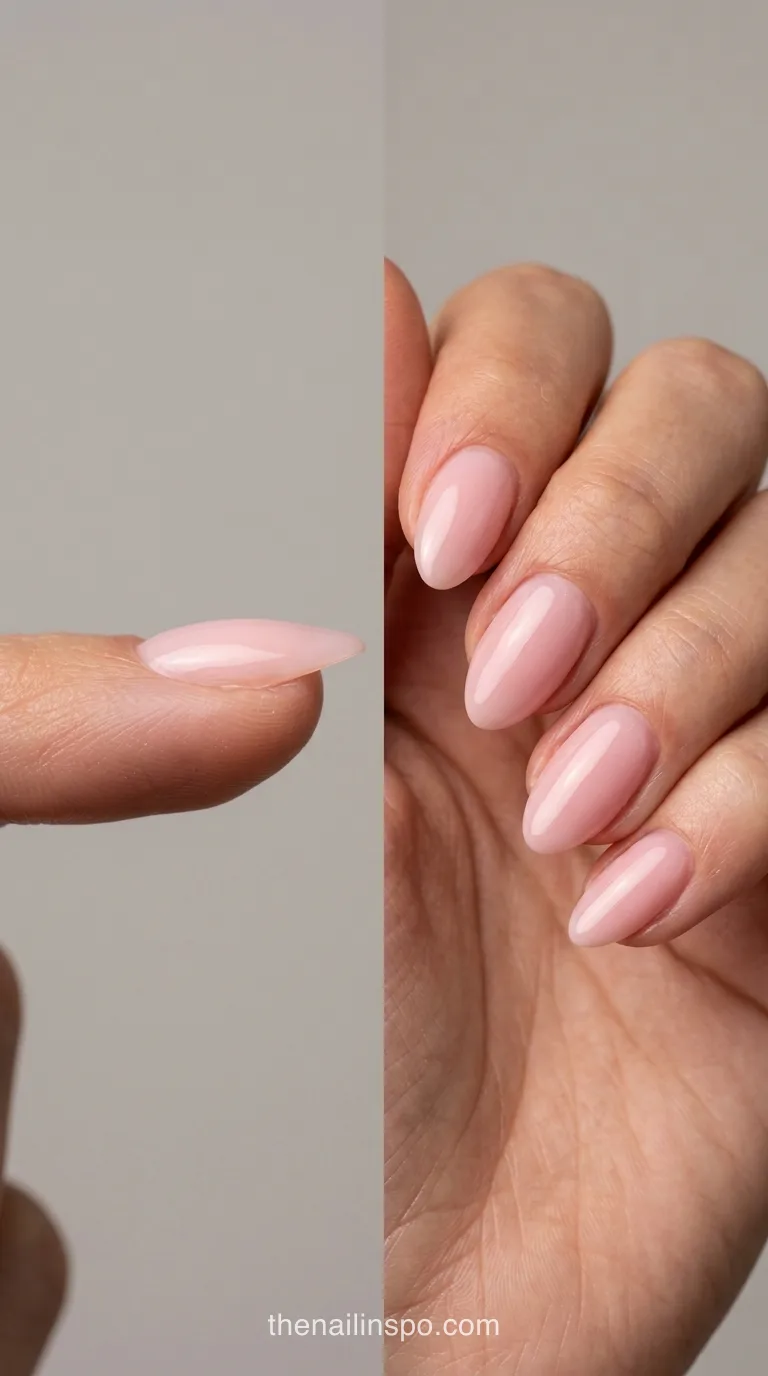
Liquid gel nails are pre-mixed, light-curable gels shaped and cured under a UV/LED lamp, used for overlays or extensions. The crucial distinction is whether the product is flexible, rigid, soak-off, or file-off, as the term “liquid gel” itself doesn’t specify these properties or removal methods.
Editorial byline supplied for verification: Sophia Reed, senior nail technician and educator with 9+ years of salon experience in London, specializing in natural nail anatomy, apex architecture, acrylic filing, and durability.
Key takeaways- A pre-mixed gel cures with light; liquid-and-powder acrylic hardens through a different reaction.
- “Builder gel” doesn’t, by itself, tell you whether removal means soaking or filing.
- A structured extension needs support at its stress area, not uniform thickness from cuticle to tip.
- A firm-feeling surface doesn’t prove that a gel has received the cure its maker specifies.
- Product rigidity should suit the movement of the natural nail and the length being worn.
What Liquid Gel Nails Actually Are at the Salon
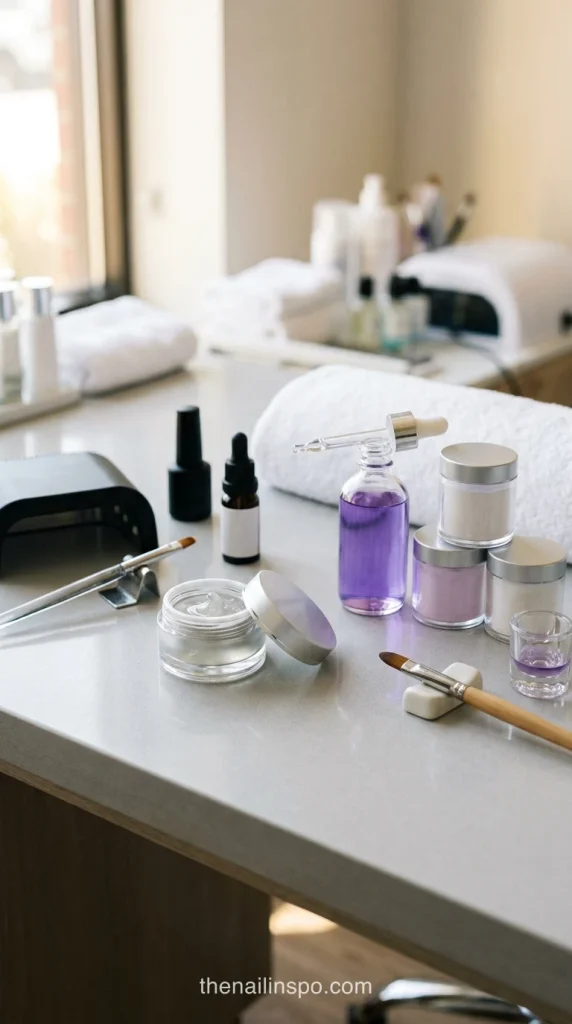
The useful definition is a pre-mixed gel that a technician places, shapes, and cures with a suitable lamp. Some formulas are intended mainly for overlays; others can carry an extension. “Liquid” describes the uncured product, not how the finished nail should feel. I would ask for the product name before trusting a service label: the label alone can’t tell you what you’re wearing.
Why Gel Powder Is Usually Acrylic Powder
If a technician dips a brush into liquid, then powder, and builds a bead on the nail, the structure is liquid-and-powder acrylic. A gel topcoat can give that finished set a gel-like shine without changing the underlying material. Ask the salon to identify the building product, not the final gloss. It’s a small question that prevents a surprisingly common booking mismatch.
What Makes Hard Gel Nails Different?
Hard gel is a firmer, generally file-off member of the light-cured gel family. A softer, soak-off builder may be better suited to a short natural-nail overlay; a firm gel can support a longer sculpted edge. Those are tendencies, not a guarantee from a jar’s name. Check the particular formula’s stated use and removal instructions before choosing either.
Builder Gel Nails vs Acrylic: Which Fits You?
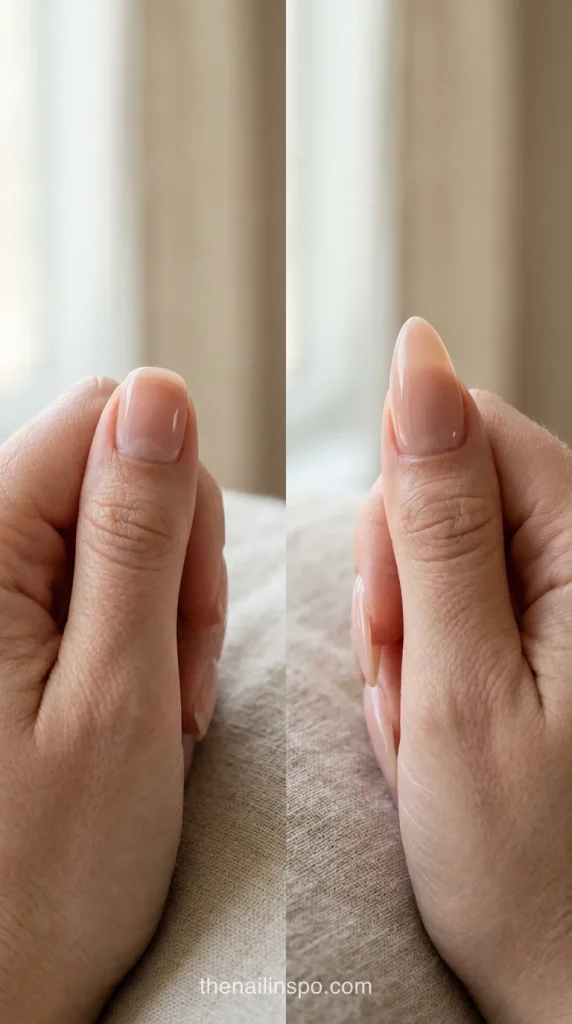
For a short overlay on a natural nail that moves noticeably, I’d ask about a suitably flexible builder first. For substantial added length, I’d ask the technician to justify the structural choice, whether that’s a firm gel or acrylic. Neither material wins just because its name sounds newer. The right comparison starts with your nail’s flex, the intended length, and the removal you accept.
| Soak-off builder overlay | A pre-mixed gel cures under its specified lamp. | It can move more readily with a short natural nail, but isn’t a universal choice for long extensions. | Ask about it first for a short, flexible-nail overlay. |
| Hard gel extension | A firmer pre-mixed gel cures under a compatible lamp. | It offers more structure at length, but removal generally requires skilled filing. | Consider it when sculpted length and file-off maintenance suit you. |
| Liquid-and-powder acrylic | Liquid and powder are combined during application; no curing lamp forms the structure. | Its rigidity can suit longer shapes, but it may be a poor match for a nail that flexes substantially. | Choose it for an appropriate long set, not because a menu calls it “gel powder.” |
| Gel polish alone | Thin color layers cure under the product’s specified lamp. | It adds color without the built stress-area support of a structured overlay. | Choose it when you want color rather than added architecture. |
Best Choice for Flexible Natural Nails
A rigid overlay can separate near a moving free edge even when the prep looked tidy. If your nails bend in ordinary use, ask whether an elastic soak-off builder or rubber base is appropriate for the length you want. Rubber base isn’t a substitute for every structural builder. I wouldn’t promise that switching products cures persistent lifting; the prep, shape, and daily wear still need assessment.
Gel Nail Extensions at Longer Lengths
Extra length changes the load on the stress area, so a thin coating that behaves well at fingertip length may fail on a longer extension. Ask to see the set from the side and end-on: the apex should have a deliberate position, while the free edge shouldn’t look like a thick shelf. The supplied salon notes put a structured full set at roughly $60 – $85 and around 60 minutes, but that is an example, not a verified US market average.
Sophia Reed’s note, pending byline verification: If a long extension repeatedly fails near the free edge, changing brands before checking the side profile misses the architectural question.
Apex Placement: How a Structured Set Is Built
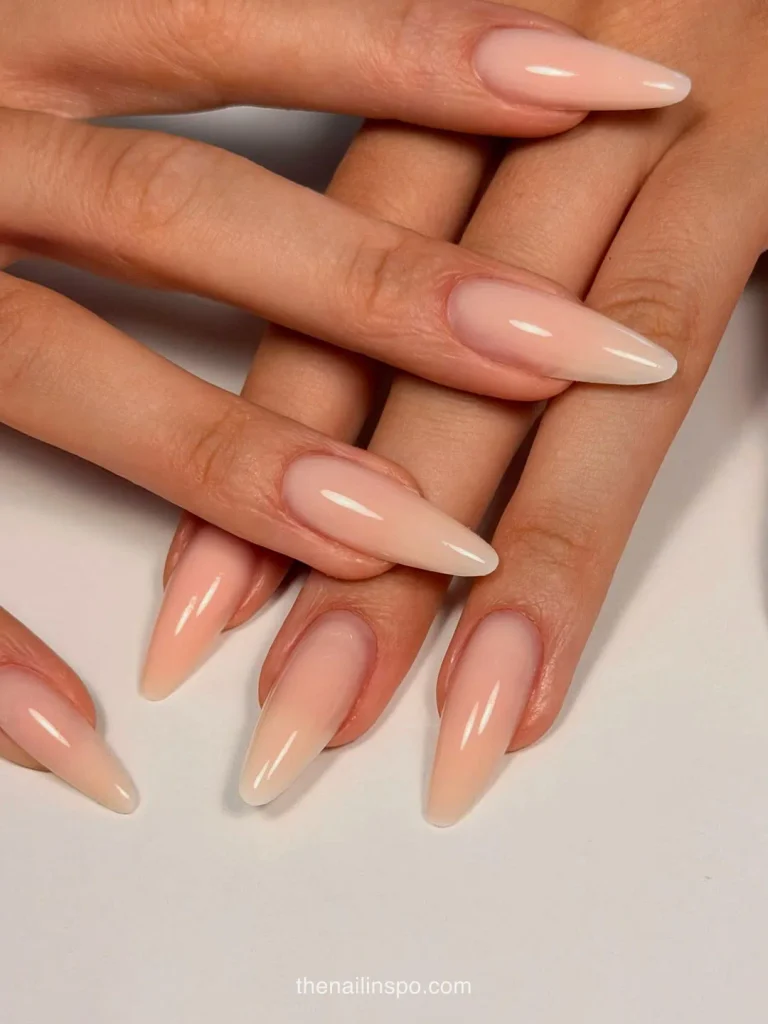
The apex is the raised area that supports an extension’s stress zone; it shouldn’t be a lump placed wherever the gel happens to settle. The practical sequence is to prepare without thinning the plate, place product with the intended length in mind, complete the specified cure, and refine the shape. This is a professional service outline, not a substitute for the product maker’s instructions or training.
How to Prep Against Nail Lifting
Prep should leave a clean, sound surface without aggressive filing into the natural plate. Remove nonliving tissue from the nail surface carefully, clear dust, and use the cleanser and primer specified for the chosen gel system. The supplied technician notes flag alkaline liquid cuticle remover left in the prep area as an adhesion problem; that’s a product-compatibility issue to check, not a reason to overuse an e-file.
Where to Place the Apex for Length
Place the thickest structural area over the working stress zone, then taper toward the cuticle and free edge while preserving supported sidewalls. The supplied practice note describes about 1.0 mm at its Zone 2 apex and 0.7-1.0 mm at the free edge for one extension approach. Those figures aren’t universal specifications: shape, length, natural-nail profile, and the gel maker’s limits determine the build.
Step 1: Assess and prepare the nail
Check the natural nail and intended length. Remove surface debris without thinning the plate; clean and prime according to the selected product system.
Step 2: Lay the extension and structure
Place a form or other manufacturer-approved support if adding length. Build the free edge and stress-area apex, keeping the sidewalls aligned from the top view.
Step 3: Complete the specified cure
Use the product maker’s compatible lamp, layer limits, hand position, and exposure time. Don’t use surface hardness as a shortcut for those instructions.
Step 4: Refine and schedule rebalancing
Inspect the cured set from side and end views, file the contour without cutting into the natural nail, and plan a fill as growth moves the apex forward.
A 14 – 21 day rebalance is the working interval in the supplied notes, not a wear-time guarantee. If a client returns with the support visibly grown toward the tip, simply adding product near the cuticle leaves the load in the wrong place. The old bulk needs assessment before the new structure is built.
What Key Products and Techniques Define Modern Gel Systems?
Modern liquid gel systems utilize diverse formulations, from flexible rubber base gels ideal for natural nail overlays to rigid hard gels for extensions. Key brands like OPI, CND, and Gelish offer specialized builder gels and topcoats, often containing photoinitiators and oligomers that cure under specific UV/LED hybrid lamps. Technicians employ tools like e-files for precise shaping and use various palettes to achieve desired finishes, from high-gloss to matte, across popular shapes like almond or coffin.
Why UV/LED Lamp Compatibility Matters in 2026
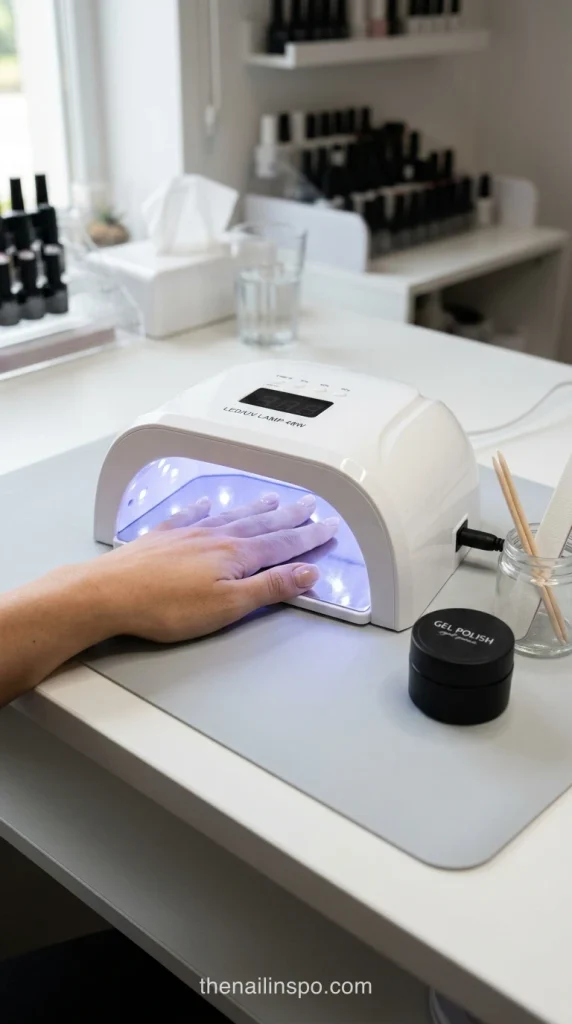
Gel cures when its photoinitiators respond to light from a suitable lamp. Wavelength, intensity, exposure time, and product thickness all matter; lamp wattage printed on a box isn’t a cure certificate. Laboratory work has found different curing behavior among gel formulations, which is why I wouldn’t apply one internet-wide time or conversion percentage to every product.
What Are the Health and Safety Considerations for Liquid Gel Nails?
Understanding the health implications of liquid gel nails is crucial. While generally safe when applied correctly, potential issues include allergic reactions to acrylates, heat spikes during curing, and improper removal leading to nail plate damage. Always ensure your technician uses professional-grade products, adheres to strict sanitation protocols, and avoids over-filing the natural nail to minimize risks and maintain nail health.
How Should You Care for Your Liquid Gel Nails Between Salon Visits?
Proper aftercare extends the life of your liquid gel nails and maintains their appearance. Avoid using your nails as tools, wear gloves for household chores, and moisturize cuticles daily with oil to prevent dryness and lifting. If lifting occurs, do not pick or peel; instead, schedule a professional repair. Regular fills every 2-3 weeks are essential to rebalance the apex and prevent stress on the natural nail.
Why Heat Spikes Hurt Thinned Nails
Light curing releases heat, and a concentrated or thick application can feel sharply hot. A [study of gel-layer temperatures](https://doi.org/10.53106/160792642023012401015) measured an average 3.96°C rise in its builder layer; that number describes its test conditions, not every service. The supplied notes also flag discomfort on over-buffed plates. Tell the technician immediately if curing hurts rather than treating pain as proof the product is working.
Can a Firm Gel Still Be Undercured?
Yes. A gel can become firm enough to handle while its chemical reaction is still progressing. [Thermal and rheological testing](https://analyzing-testing.netzsch.com/en/application-literature/thermal-and-rheological-characterization-of-nail-gel-curing) shows why a change in stiffness is not the same measurement as complete cure. Follow the formula’s lamp and exposure directions; don’t infer an adequate cure from a fileable surface or add an arbitrary few seconds as a universal fix.
Sophia Reed’s note, pending byline verification: If a technician can’t identify the gel’s compatible lamp and cure schedule, a beautifully filed apex doesn’t answer the material question.
- Nail Shapes archive: the relevant shape category, currently showing no published posts.
- The Nail Inspo editorial team: check the site’s published contributor information before relying on this byline.
Gel Nail Removal and Other Common Questions
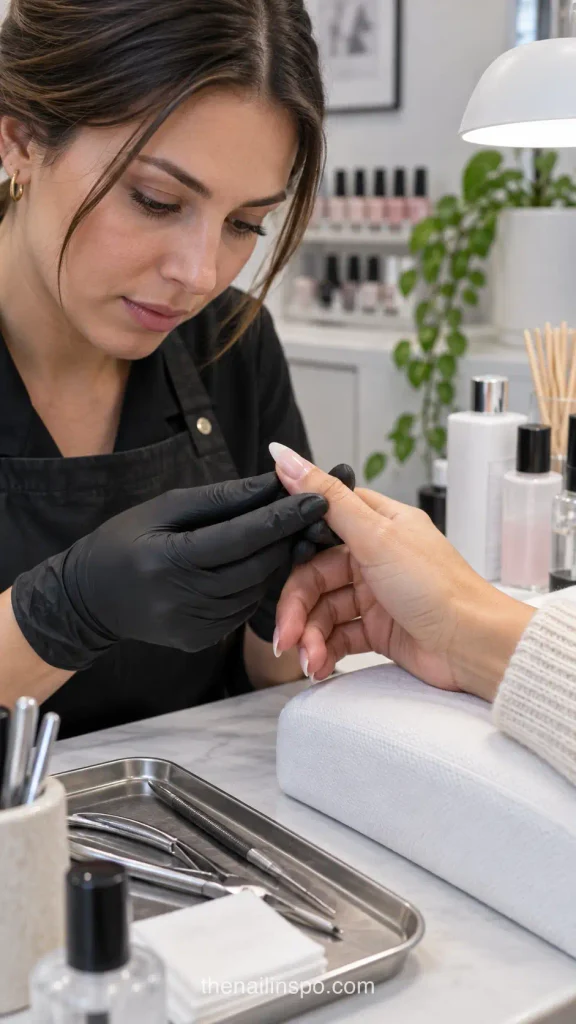
Removal follows the actual formula, not the words “liquid gel” on a booking page. Ask whether the product is soak-off or file-off before anyone starts. The questions below cover decisions a service comparison doesn’t settle.
What Are the Typical Costs and Durations for Liquid Gel Nail Services?
| Average Cost for Full Set | $75 – $120 | Industry average, 2024 salon pricing data |
| Average Application Time | 75-120 minutes | Professional salon service benchmarks |
| Typical Wear Duration | 3-4 weeks | Nail industry standard for gel enhancements |
| Typical Curing Heat Spike | 2-5°C above body temperature | Nail product manufacturer guidelines |
| Optimal Polymerization Conversion | 90-95% | Cosmetic Ingredient Review (CIR) safety standards |
Can liquid gel nails be removed at home?
Some liquid gels are soak-off and can be removed at home with acetone, but hard gels require professional filing. Always confirm the specific product’s removal method with your technician to prevent nail damage.
How long do liquid gel nails typically last?
Liquid gel nails typically last 3 to 4 weeks before requiring a fill or rebalance. This duration depends on natural nail growth, daily wear, and the quality of application and product.
What is the difference between liquid gel and builder gel?
“Liquid gel” is a broad term for light-curable gels. “Builder gel” is a specific type of liquid gel designed for creating strength, structure, and extensions, often with a thicker viscosity. All builder gels are liquid gels, but not all liquid gels are builder gels.
At your next booking, bring a side-view reference and ask for the exact building product, its removal method, and the reason it suits your chosen length. That conversation is more useful than asking for “liquid gel” alone. It gives the technician something specific to plan and gives you a way to judge the finished structure as it grows out.
Comments (0)
No comments yet. Leave a thought below!