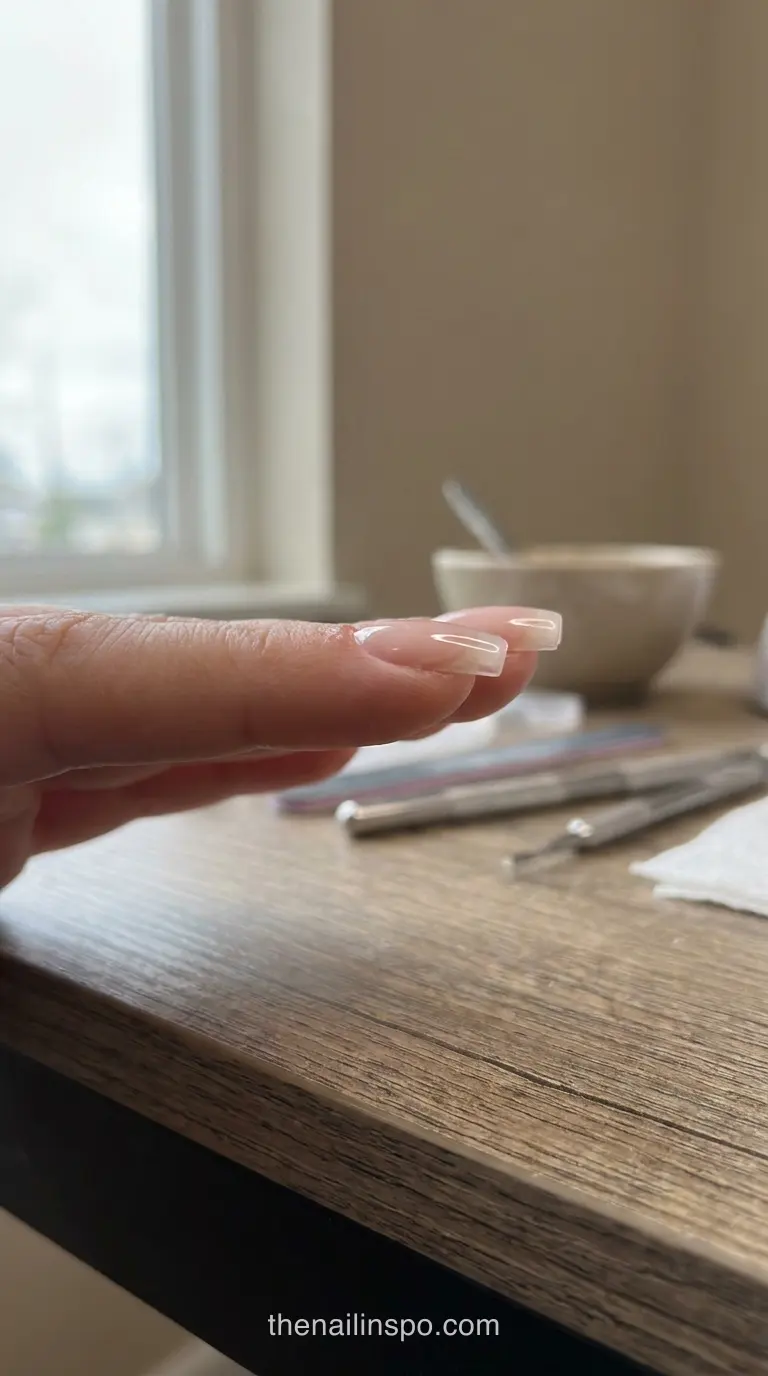
Most salons book fills every two to three weeks, and the real answer to how often to infill acrylic nails comes down to one measurement: the gap at the cuticle. Once that gap passes 3.0 mm, or the set reaches week four, a standard Zone 1 infill stops being structurally safe and turns into a rebalance. I’ll walk through the growth math and the point where cost jumps. Then the signs that the calendar is lying to you. The short version: book by the gap, not the date.
Key takeaways- Natural nails grow about 3.0 to 3.5 mm a month, or roughly one credit-card thickness a week.
- A standard Zone 1 infill stops being structurally safe once the cuticle gap passes 3.0 mm or the set reaches four weeks.
- Rebalances past the four-week line take 75 to 90 minutes in London salons and cost more than a standard fill.
- A 1.5:1 monomer-to-powder ratio keeps the set strong, while a dry 1:1 mix fractures and a wet 2:1 mix lifts.
- Keep the e-file at 5,000 RPM or less on the natural plate to avoid rings of fire.
- Many sets can stay on through rebalances with a clean foundation, so routine soak-offs aren’t required.
How Often to Infill Acrylic Nails: The Short Answer
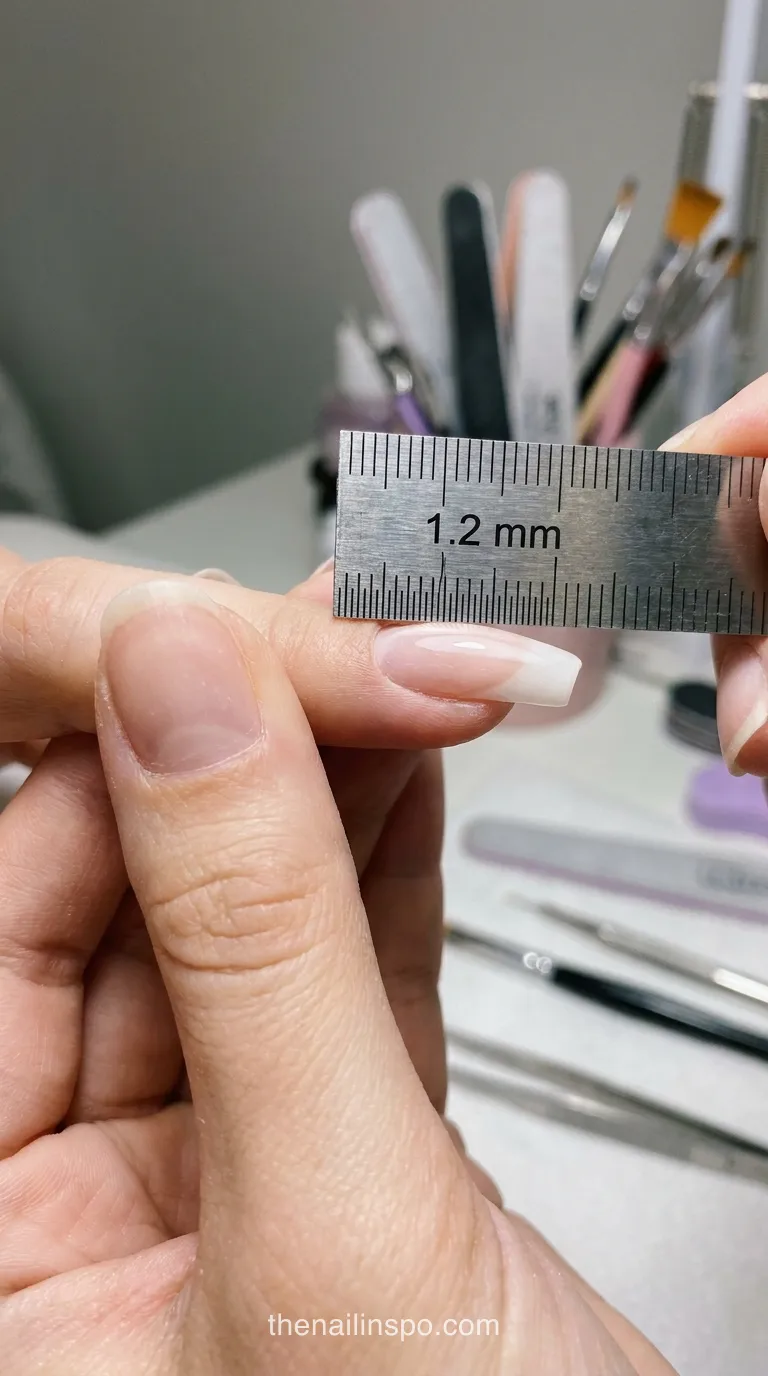
Book the next fill in two to three weeks, and check the gap at every visit. If the proximal cuticle gap is under 3.0 mm and the set is under four weeks old, a standard infill does the job. Cross either line and you’re paying for a rebalance.
On my bench, I measure before I touch the file. Natural nails grow about 0.76 mm a week, so by week three the 1.0 mm load-bearing apex has migrated roughly 2.3 mm forward, off the anatomical stress zone. The free edge then becomes a lever. Every knock on the tip pries at the bond instead of pushing into the nail, and that’s why a week-five fill feels like a repair job.
Does a 4-week fill still count?
Sometimes, but only if the gap is still under 3.0 mm and the apex hasn’t drifted. At four weeks, check both. If either fails, the visit becomes a rebalance where the tech files down about half the distal bulk and repositions the apex. Holding a fill to save money usually backfires, because the repair is the expensive part.
Rebalance timing for thin natural nails
My take: thin plates get less time, not more. A thin natural plate gives the enhancement less to anchor into, so each week of apex drift loads the bond harder. If your natural nails are thin, book at two weeks and treat week four as a hard stop. Peeling or other nail changes can have causes beyond the set, so bring those to a doctor, not just your tech.
 Read NextNail Glue for Gel: 5 Secrets to Stop Pop-Offs Now!
Acrylic Fill Schedule Compared Week by Week
This is the table I’d use at the bench, read top to bottom. The verdict column tells you what to book, not just what’s happening.
| Stage | What to check | Service needed | Verdict |
|---|---|---|---|
| Under 3 weeks, gap under 3.0 mm | Apex still sits on the stress zone | Standard infill | This is the calendar you’re aiming for. Book it and keep the schedule. |
| Gap at or past 3.0 mm, under 4 weeks | Apex drift and lifting at the cuticle | Rebalance with bulk reduction | Book the rebalance now, because the set is already past the safe line. |
| 4 weeks or more | Full apex reposition | Rebalance, longer appointment | Expect more time and a higher bill, and plan it as its own visit. |
| Any lifting or a hollow you can feel | Base layer and bonding | Assess before filing | Fix the foundation first, because stacking fills over a lift hides the problem. |
Cuticle gap limit: the 3.0 mm rule
Measure from the cuticle line to the start of the enhancement, at the center of the nail. Once that gap passes 3.0 mm, the apex has moved far enough that a simple infill can’t restore the stress zone. Measure it every visit rather than eyeballing it, because the gap grows slowly enough to look normal.
Infill cost in London vs New York
A rebalance costs more mainly because it takes longer. Salons in the UK and US add 15 to 30 minutes and a surcharge of £5 to £17 or more. London rebalances past four weeks run £30 to £65 for 75 to 90 minutes, and New York fills average $40 to $50 for 60 to 80 minutes. Prices move, so confirm before you book.
Sophia Beed’s note: Opaque cover-pink hides pocket lifting, so ask for a crystal-clear base layer on any set you’re rebalancing. You can’t check what’s under a cover you can’t see through.
Why Your Nail Growth Rate Sets the Clock
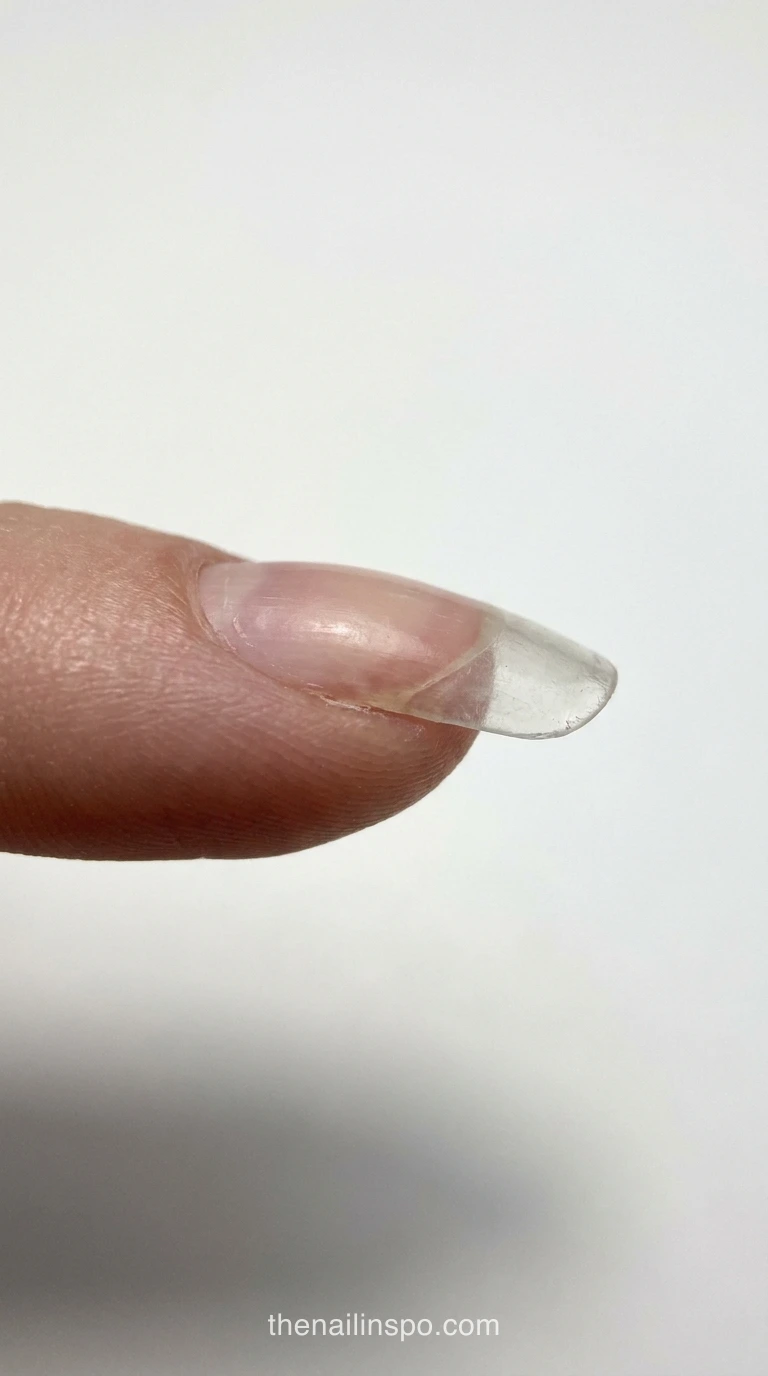
Your nail growth rate, not the calendar, decides when the apex leaves the stress zone. Natural nails grow about 3.0 to 3.5 mm a month, roughly 0.76 mm a week. That’s fast enough that a two-week-old set and a four-week-old set are different structures, even though they look identical from across the room.
The powder side matters here too. Acrylic powder that’s mixed off-ratio fractures under that load, which is why the mix ratio gets its own section below. For now, the point is that stress builds with each week of growth, not with the appointment itself.
Can you wait five weeks for a fill?
You can wait, but you’re booking a rebalance. At five weeks the apex has traveled past the point where a standard infill restores the stress zone. The visit gets longer, the filing gets heavier, and the bond you’re anchoring to sits farther from where it should be. Plan it as its own visit instead of hoping the set holds.
Do faster growers need fills sooner?
Often, yes, because faster growth closes the gap sooner. Two clients with the same set can need different intervals, so the calendar is a starting point and the measurement sets the next appointment. Grow-out speed varies by person, so one schedule won’t fit everyone.
 Read NextWhy Do Acrylic Nails Lift? 6 Secrets to Stop It Now
Rebalancing Acrylic Nails: E-File Speed Matters
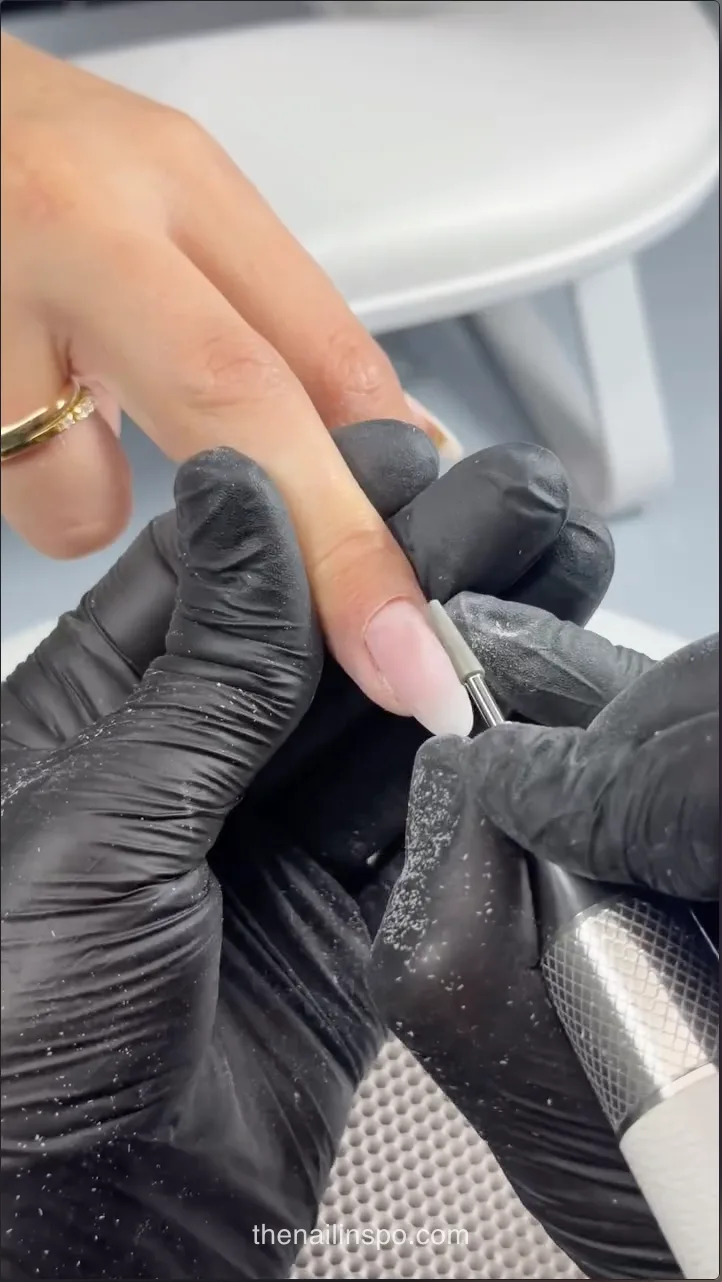
A rebalance runs in a fixed order: assess, remove bulk, adjust the e-file speed, anchor the base, build to ratio, and inspect. The speed rule is the one I’d never skip, so it gets its own step.
Step 1: Assess the gap and apex
Measure the cuticle gap and check whether the apex has moved off the stress zone. If the gap is past 3.0 mm or the set is four weeks or older, plan a rebalance instead of an infill.
Step 2: Remove bulk with the right bit
Reduce the acrylic bulk with a fluted tungsten carbide barrel bit at 10,000 to 15,000 RPM. File down about half the distal bulk, and keep the bit moving so it never sits on one spot.
Step 3: Drop the speed on the natural plate
On the natural plate, stay between 2,000 and 5,000 RPM with a 240-grit buffer or diamond flame bit held flat. Step up to 5,000 to 10,000 RPM only for Zone 3 transition contouring.
Step 4: Prime and bond Zone 1
Apply an acid primer to the natural nail, then two tacky coats of one bonding system. Young Nails Protein Bond is a HEMA and resin-based option, and CND Retention+ is a covalent-bonding monomer. Pick one and stick with it, because mixing systems makes a failure hard to trace.
Step 5: Build at a 1.5:1 ratio
Mix to a 1.5:1 monomer-to-powder ratio. A dry 1:1 mix fractures under stress. A wet 2:1 mix shrinks and lifts at the perimeter, and it can leach unreacted monomer, which may contribute to allergic contact dermatitis.
Step 6: Check for air pockets before the final coat
Before the final coat, file a small area and look for whitish central air pockets. Opaque pink hides them, so check now, not after.
Acrylic Lifting Fixes for Beginners
Lifting usually starts at the perimeter, and the fix starts with the mix and the base. Check your ratio first, then your primer and bonding coats. A new top coat won’t cure a lift caused by a wet 2:1 mix, so re-prep the nail instead.
It’s tempting to blame the product, but the brush load is usually the first thing to check. Practice a few sets on a practice hand before you rebalance a paying client’s nails, and watch how the bead settles.
Catching Pocket Lifting Before It Spreads
Pocket lifting is a cavity in the middle of the plate that doesn’t catch hair, so you won’t feel it until it’s large. Opaque cover-pink hides it, which is why a crystal-clear base matters. If your builder or top coat uses TMO photoinitiators, check that your lamp offers 365 nm and 405 nm, since a single wavelength can leave a 1.0 mm apex under-cured.
Recommended for you- Pincer nails and apex placement: shape changes where the stress lands, so check it if your nails curve sharply.
- Why acrylic nails lift: the causes behind the lift, with more detail on the cuticle side than the sections above.
Frequently Asked Questions About Acrylic Nails

How long do acrylic nails last?
The enhancement can stay on as long as each rebalance restores the apex and the bond holds. Natural nails keep growing under the set, so the practical limit arrives when the apex can’t be restored or the natural plate starts thinning. If you’re also weighing a different system, our hard gel vs acrylic breakdown compares the two.
Do acrylic nails need to be soaked off every few fills?
No, and the usual reasons don’t hold up. Dead keratin doesn’t breathe, so a rest for air isn’t the point. Technicians report that trapped moisture tends to feed Pseudomonas bacteria rather than fungus, and that repeated acetone soak-offs thin the natural plate and make lifting more likely. A clean foundation can often stay on through rebalances, but see a doctor if you notice pain or swelling.
Next visit, measure the gap before you sit down and say the number out loud. Compare it to the 3.0 mm line and the four-week mark, then book the fill or the rebalance on the spot. If the gap creeps up every visit, raise that trend with your tech before the set starts to lift. Watching one number will do more for your nails than any reminder app.
Next visit, measure the gap before you sit down and say the number out loud. Compare it to the 3.0 mm line and the four-week mark, then book the fill or the rebalance on the spot. If the gap creeps up every visit, raise that trend with your tech before the set starts to lift.

Comments (0)
No comments yet. Leave a thought below!