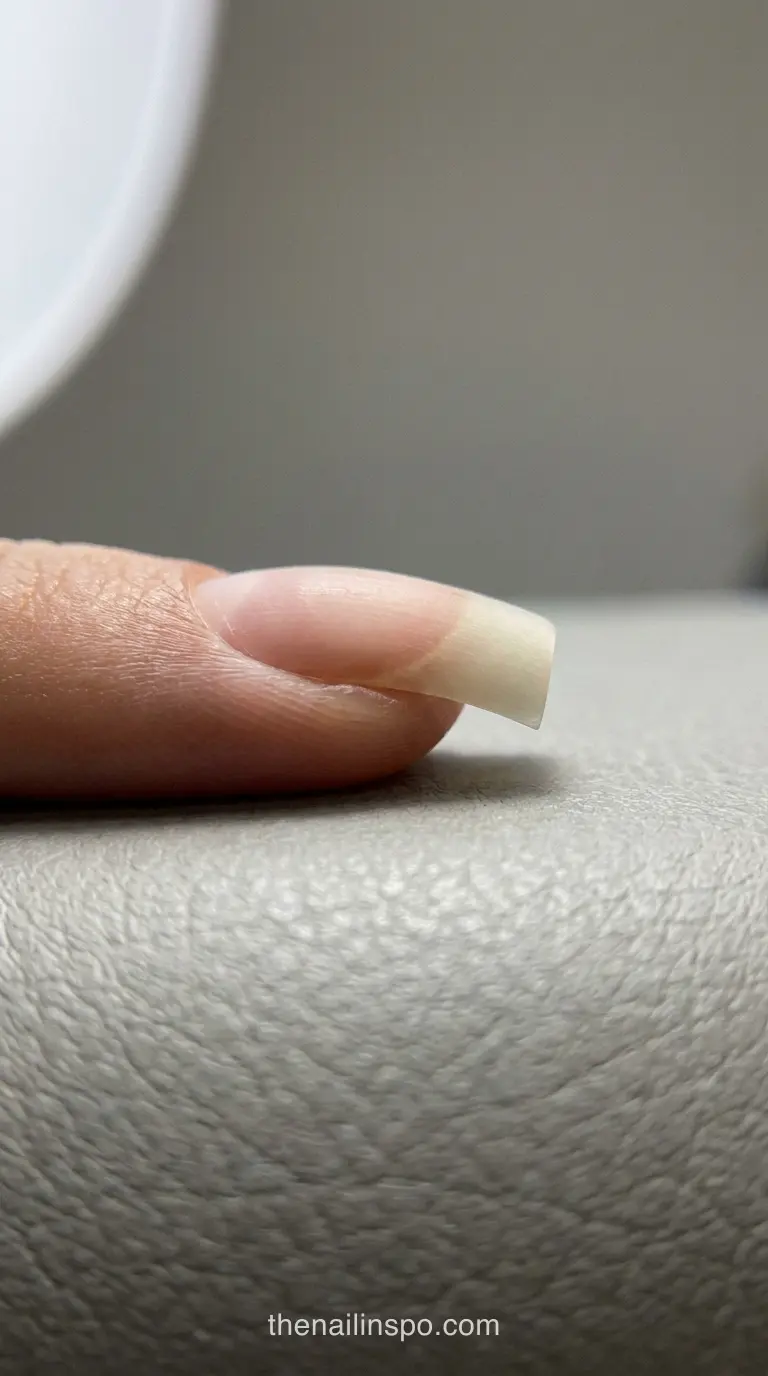
Pincer nails curve inward at the free edge and the sides press down into the nail bed like a clamp. Most salon guides file this under ingrown toenails which sends techs after the wrong fix. The sides crush tissue without breaking the skin and that’s where the pain comes from. Clinicians sometimes call the condition pincer nail syndrome. Below: what’s actually happening, what’s safe to do with a file and the point where I’d stop and send the client to a podiatrist.
Key takeaways- Pincer nail sides crush the surrounding tissue without piercing the skin, so the pain is mechanical rather than an ingrown toenail.
- A V cut into the center of the free edge can’t change a curve that begins at the matrix.
- Yabe’s Curvature Index (CI = B/A) puts moderate pincer curves near 1.65 and trumpet nails near 2.86.
- Soak thick curved nails for 5 to 10 minutes, then cut straight across with wide-jawed podiatry nippers.
- Judge bracing per application: Onyfix kits work out to roughly CAD $7 to $11 each and B/S Spange tabs to roughly €3.20 to €6.50 each.
Pincer nails are a curved nail problem, not an ingrown toenail
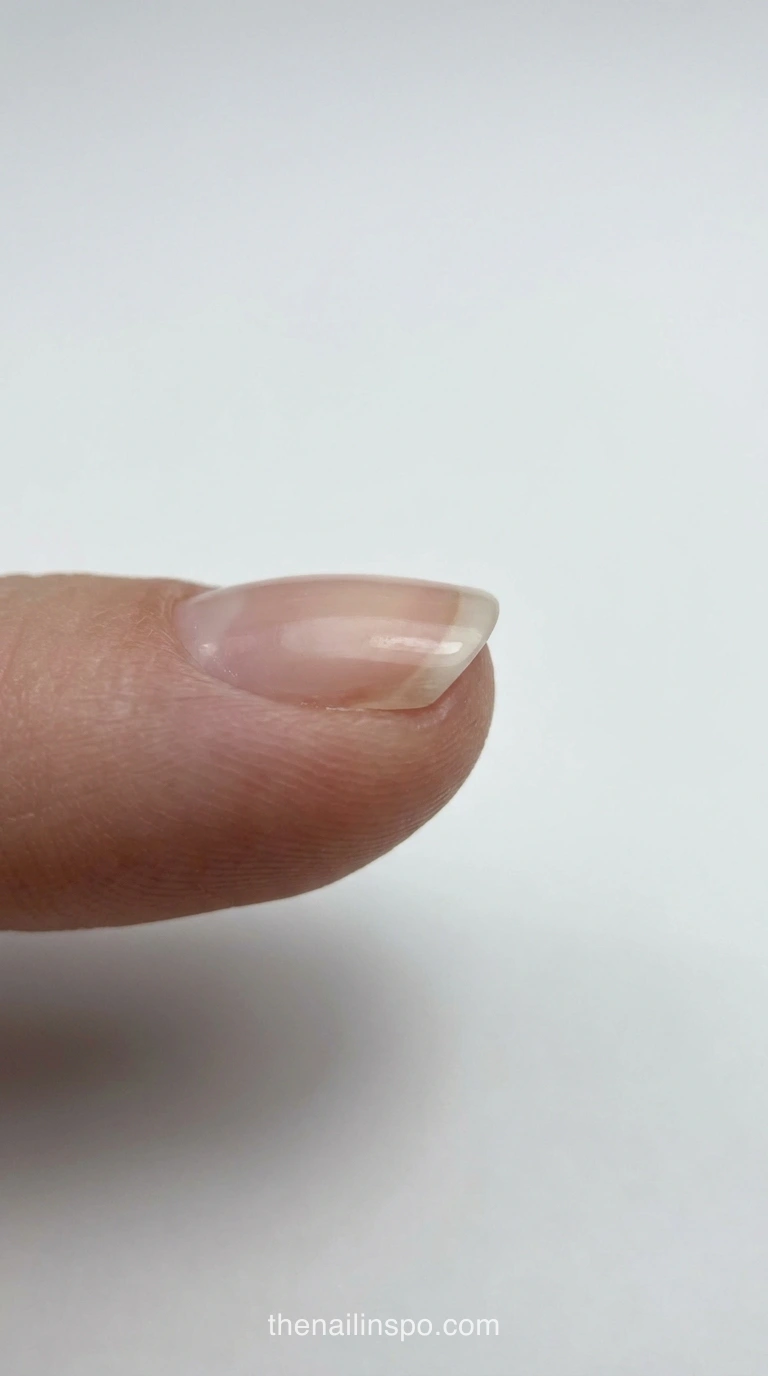
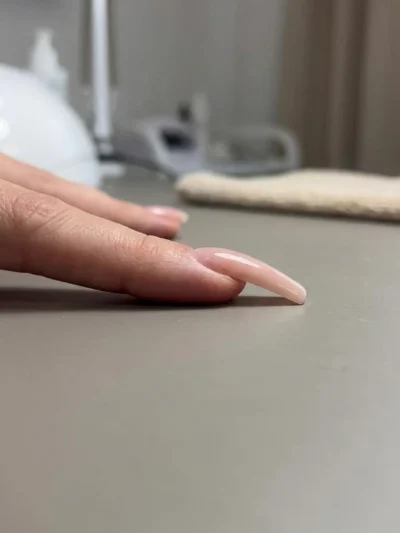
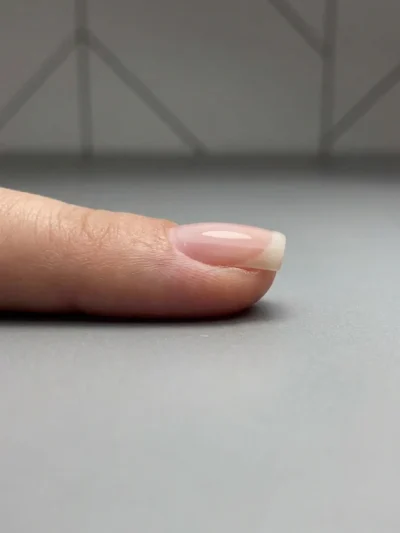
A pincer nail is one whose free edge curls down while its sides roll inward until they press into the nail bed. The discomfort comes from those lateral edges crushing the tissue beneath them. Nothing has to pierce the skin for the nail to hurt.
An ingrown toenail is a skin problem: the edge digs into the fold. A pincer nail is a shape problem and treating it like the first one wastes a client’s time and leaves the pressure exactly where it was.
Why curved tips throb under pressure
Press a standard flat dual form onto a curved tip and it pinches the lateral grooves. Technicians describe the result as a throb that lingers, which is the pincer nail pain clients usually mean when they say the nail hurts.
Ingrown toenail myth vs real mechanism
Most top guides still recommend a center V, on the theory that a bone spur pushes the nail up and the V relieves it. The morphometry work I’ve read doesn’t support that chain. Cutting a V changes the free edge, not the curve that starts at the proximal matrix, so the curve underneath stays exactly where it was.
 Read NextWhy Do Acrylic Nails Lift? 6 Secrets to Stop It Now
Trumpet nails vs moderate pincer: how severe is yours?
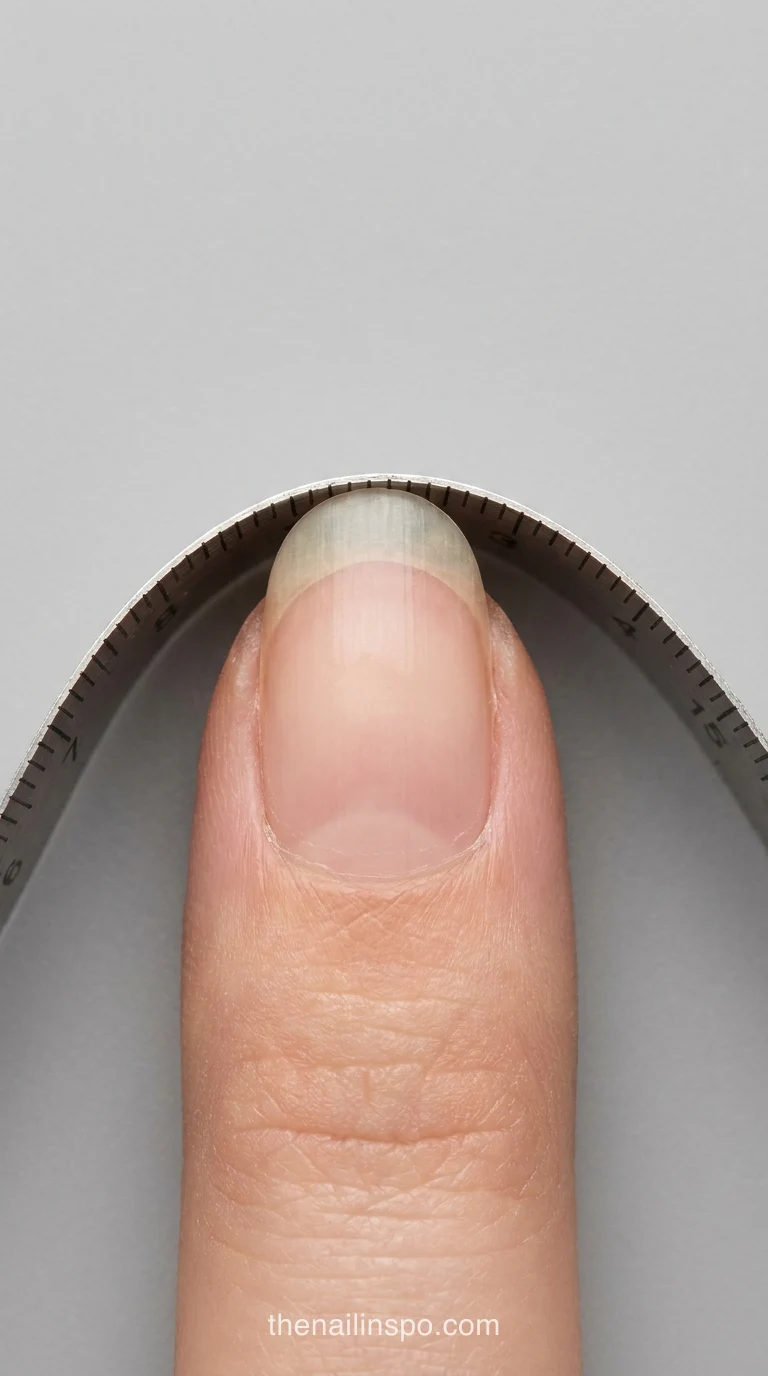
Clinicians grade severity with Yabe’s Curvature Index. Trace the curved length of the tip (B), then divide by the straight width between the lateral edges (A). The scores in the studies I’ve read sit around 1.65 for moderate pincer curves, 2.86 for trumpet nails and up to 3.62 in extreme cases. After treatment, the same measurements drop to about 1.10 to 1.32.
| Severity | Reported CI | What it tells you | Verdict |
|---|---|---|---|
| Moderate pincer | About 1.65 | The curve is within reach of careful salon shaping and bracing. | Work it in the salon, with limits. |
| Trumpet nails | About 2.86 | The curve is past what file work can reliably change. | Refer for a clinical assessment. |
| Extreme | Up to 3.62 | The sides are doing the most crushing and the nail is least responsive to shaping. | Refer, don’t improvise. |
| After treatment | About 1.10 to 1.32 | The curve has come back toward a flatter profile. | Maintain with regular checks. |
Treat the table as a rule of thumb, not a diagnosis. A ruler and a soft tape will get you close enough to sort moderate from severe, but a clinical number needs a clinician’s measurement.
Nail filing steps for thick curved tips in the salon
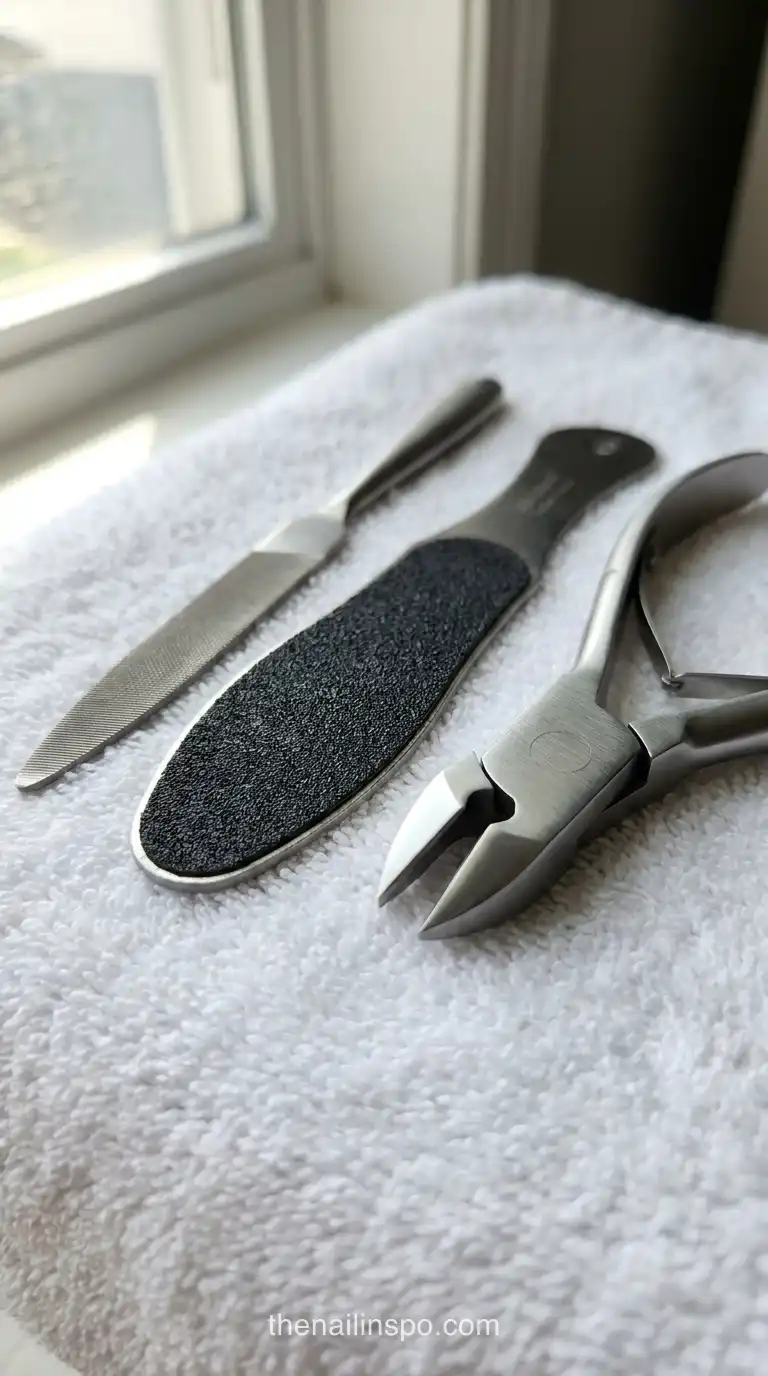
Filing a thick curved tip is about staying inside tolerances. This is the sequence I follow and every step is a limit, not a suggestion.
Step 1: Soak the nail
Soak thick curved nails in warm water for 5 to 10 minutes. Cutting a dry, cold curve is harder to control, so skip this and you’ll fight the nippers.
Step 2: Cut straight across
Use wide-jawed podiatry nippers and cut straight across the free edge. Don’t cut a V. You’re removing length, not reshaping the curve.
Step 3: Smooth the corners only
File the corners with a 180-grit or finer hand file. Buff the surface with a 240-grit buffer and stop once the corners are smooth.
Step 4: Leave the drill alone
Don’t attempt the podiatric Sano-Ogawa central drill-thinning technique in a salon, because the thermal burn risk to the nail bed is too high. If the nail needs thinning that deep, refer it.
Why dual forms pinch the sidewalls
Flat dual forms and curved nails don’t match. Pressing the form down compresses the lateral grooves and causes the throb described above. If the form pinches, switch to one that fits the nail bed’s width. Don’t push harder to make it seat.
Filing mistakes that make curves worse
The classic mistake is filing a short extension into a steep tapered coffin that’s narrower than the nail bed base. The eye reads the sides as the widest part, so the fingers look wider than they are. Widen the base before you taper, even if the final shape ends up shorter.
Sophia Beed’s note: I soak first, every time, even when the client says they’re in a hurry. Five minutes saves the nippers from fighting the nail.
 Read NextHard Gel vs Acrylic: Which One Is Best for You?
Bone spur under the nail: a result of the curve, not its cause
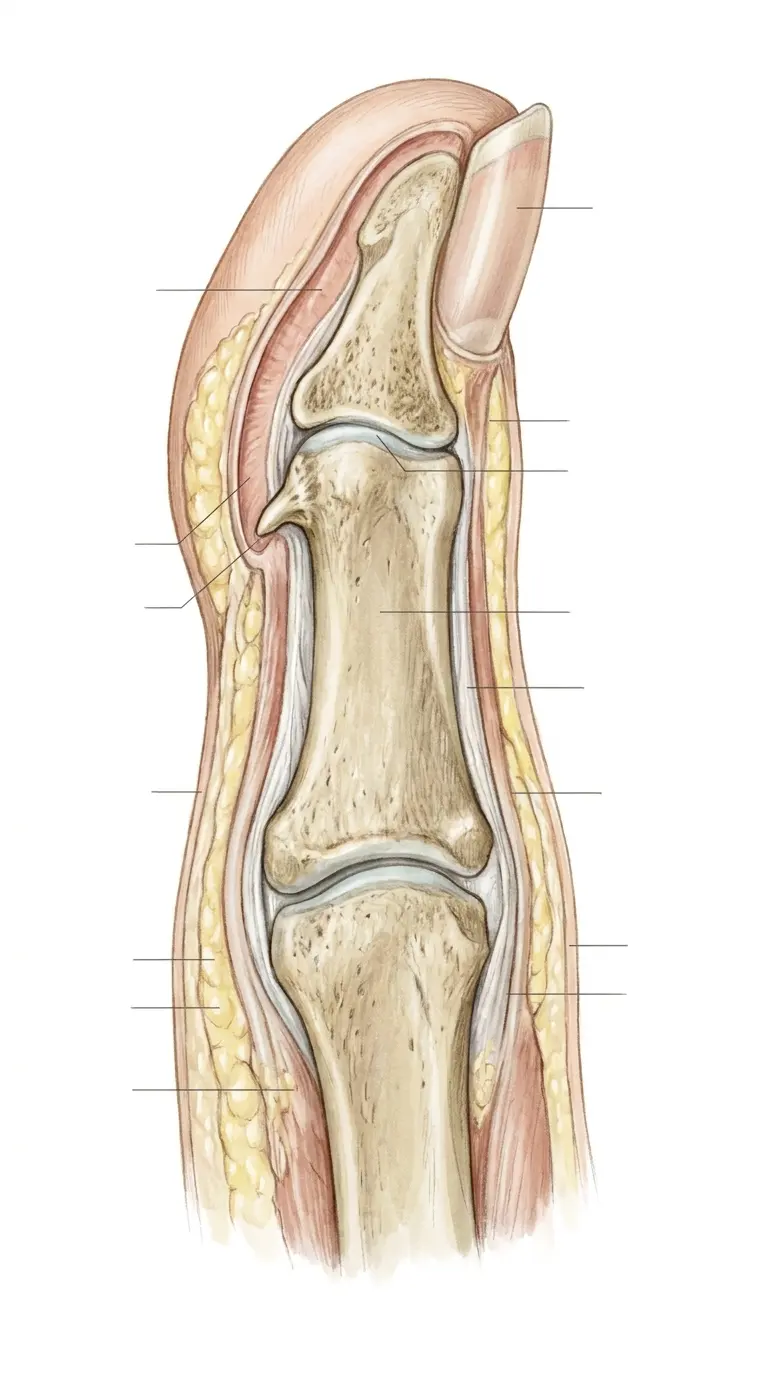
The bone spur is usually a result. In radiographic studies, the base width of the distal toe bone matches between affected toes (19.5mm) and healthy controls (19.4mm). The spurs, also called osteophytes, appear as the curved nail pulls upward on the bone. Interphalangeal joint angles average 14.0 degrees in affected toes compared with 7.9 in normal toes.
Why do nails curve in the first place?
Two causes show up often enough to check: fungal infection and long-term beta-blocker use. About 37.1% of pincer cases in the figures I’ve seen involve onychomycosis and beta-blocker curves often flatten after a physician switches drug class. Beyond those, I won’t pretend the cause is settled, because it isn’t in the sources I have. A thick, discolored nail that has suddenly curved belongs with a doctor first.
 Read NextNail Apex Placement: 6 Best Steps for the Perfect Set
Nail bracing costs in 2026 and which kit is worth it
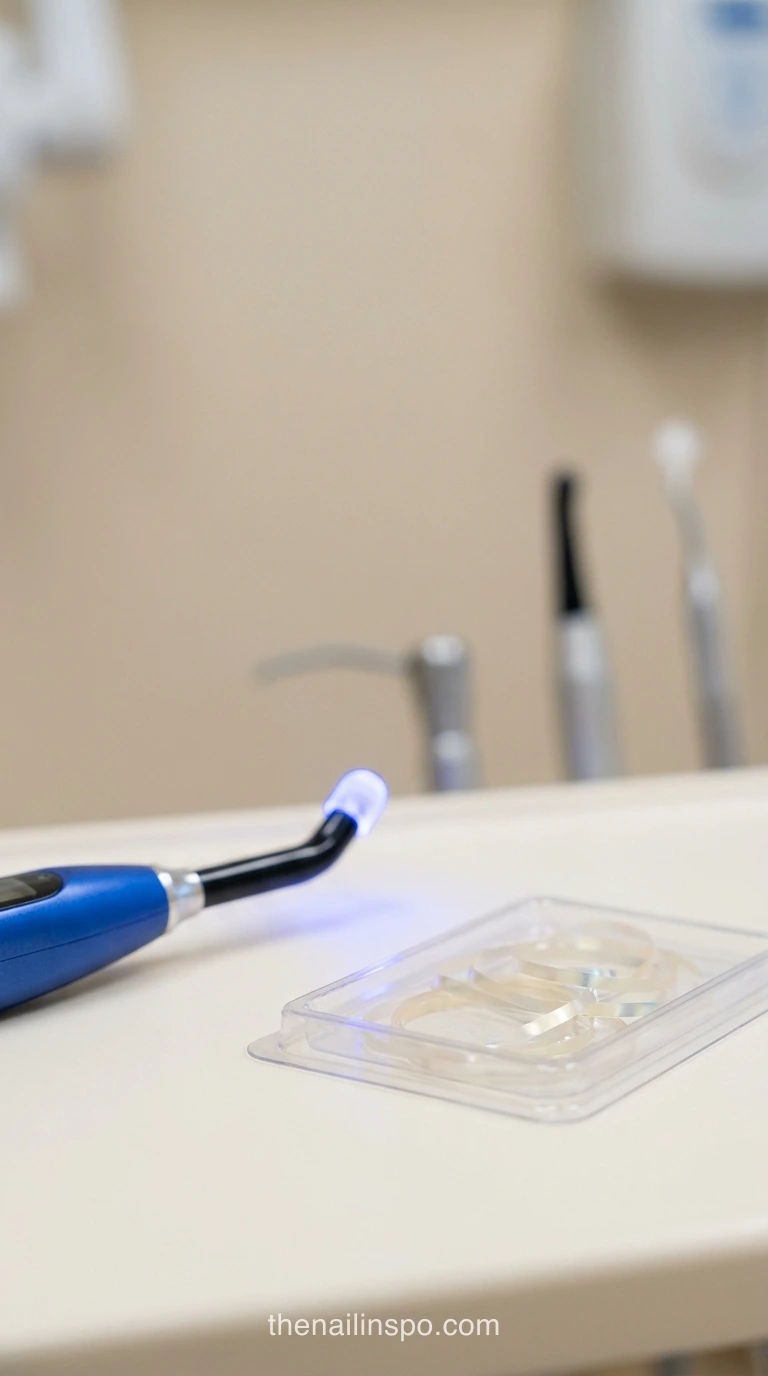
Bracing is the non-invasive route that certified techs and podiatrists use to correct curvature without filing and it’s reported as painless. Two systems come up most. Onyfix uses 2mm blue-LED composite bands cured for 30 seconds, with starter kits at CAD $545 to $645 for 60 to 80 applications and UK clinics charging £55 per treatment. B/S Spange uses 0.26mm fiberglass magnetic strips, with a 40-tab starter kit at €129.11 to €260.90 in Europe.
Here’s my take: judge bracing by cost per application, not the box price. Using the kit counts quoted, that’s roughly CAD $7 to $11 for Onyfix and €3.20 to €6.50 per tab for B/S Spange. Pick the one your client will come back for, because a band they drop after three weeks is the most expensive option of all.
Onyfix bands: cost and treatment time
If you book Onyfix as a service, the £55 UK session price is the number your client will compare against. Price it per session and don’t let the starter kit’s sticker price set expectations. Each band cures for 30 seconds, so the appointment time is driven by placement, not the light.
Sophia Beed’s note: I’d price bracing per session, not per box. The kit sitting in a drawer costs more than the one you use every week.
Builder gels after the EU TPO ban
The EU banned TPO photoinitiators from September 1, 2025 under Regulation (EU) 2025/877. Salons building overlays on sensitive curved nails have been switching to HEMA-free, TPO-free builders to avoid heat spikes and allergic onycholysis. OPI Intelli-Gel and Muse Builder Gel are two names that come up in that switch. Treat that as a starting point, not a guarantee, because reformulations change. Check the current ingredient sheet before you order.
Frequently asked questions about overlay lifting
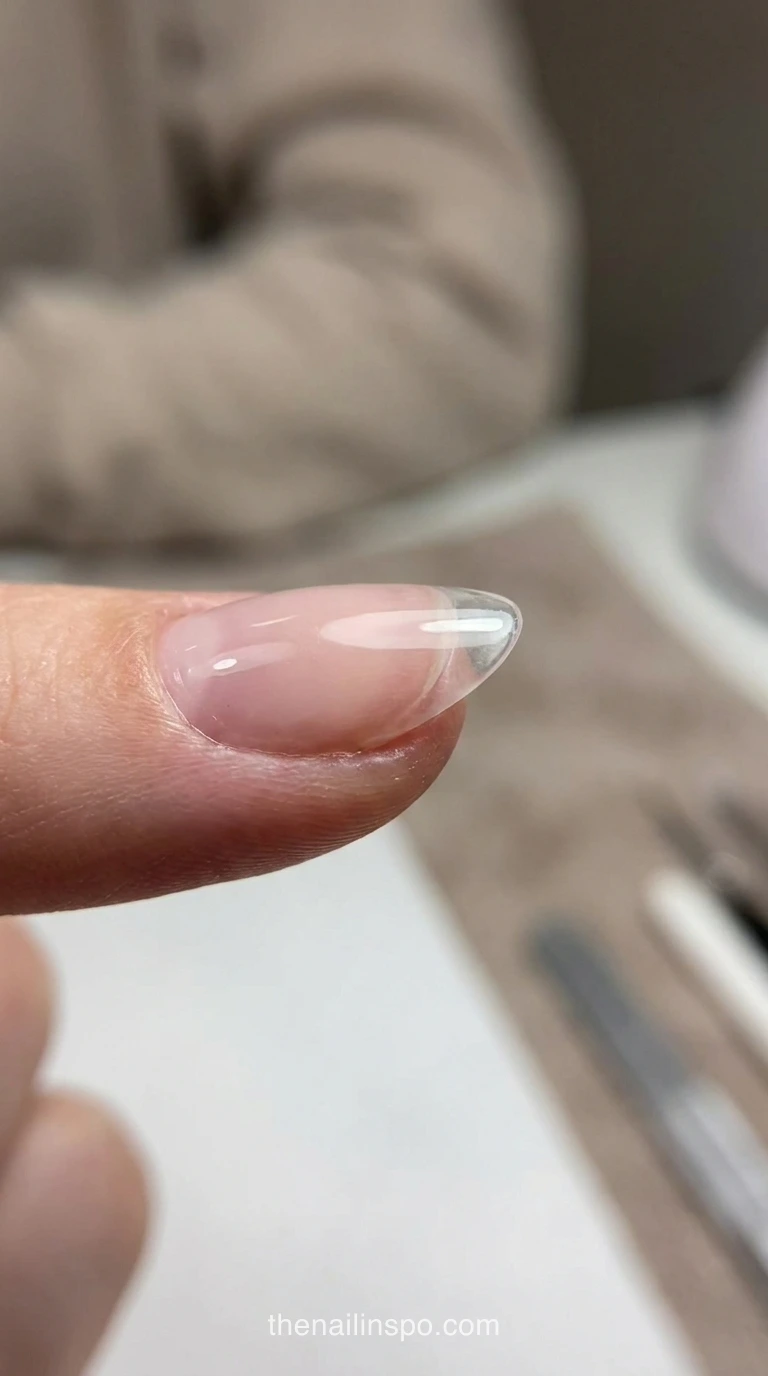
Can pincer nails be fixed without surgery?
Often the curve can be reduced without surgery, using bracing and careful filing, but results depend on severity and cause. Moderate curves respond better than severe ones, and a severe curve usually needs more than salon filing. If there’s pain, thickening, or discoloration, see a podiatrist before adding any product.
Why do my overlays lift on curved nails?
Lifting usually starts at the sidewalls. Those areas have little surface to bond to, and they’re the first place a flat form pinches, so the product never settles flat. Build thinner at the sides, keep the apex over the nail bed’s curve, and make sure the sidewalls are clean and dry before product goes on.
Should I file a pincer nail down to the sidewalls?
No. Filing the sidewalls removes the surface that holds product, and it changes the free edge rather than the curve, so the overlay has less to hold onto. If a client wants a narrower look, choose a form that fits the nail bed width first, then taper. That order matters.
Before your next curved-nail appointment, check two things: whether the sides press into the grooves when the form goes on, and whether the curve looks moderate or severe by eye. If it’s severe, stop shaping and refer it. Knowing where your skill ends is the most useful thing a salon can offer and clients notice that more than the color on the shelf.
Comments (0)
No comments yet. Leave a thought below!