
Can you wear blue nails to work? In most jobs, yes, as long as the nails are short and the polish is intact. Solid blues pass far more dress codes than people assume. The real exceptions are uniformed and clinical roles with written nail rules. I’m Tanya, an editorial manicurist who has spent six-plus years styling runway and bridal catalog hands in Miami, and in my experience the blue itself is rarely what gets someone a comment from HR. It’s the chip on the index finger during a client call.
Key takeaways- Blue polish is acceptable in most offices when nails are short, solid-colored and free of chips.
- Dark navy works as a workplace neutral, while bright cobalt, chrome and glitter blues carry more risk in conservative settings.
- Dress codes flag nail length and chipping more often than they flag color.
- The US Army is the clearest exception, because its uniform regulation treats every shade of blue as an extreme color.
- Navy stains and wrinkles for chemical reasons, and both problems can be fixed with the right base and thinner coats.
Can You Wear Blue Nails to Work? The Short Answer

Yes, for most jobs. Blue belongs in the same group as burgundy or forest green: a solid, grown-up color that dress codes rarely mention by name. What gets flagged is condition. A clean navy on short nails passes nearly any office, but a chipped cobalt on long almonds won’t pass anywhere with a client in the room.
Plenty of articles say corporate offices ban blue outright. I don’t buy it, and the polling doesn’t back it up either. In workplace surveys of conservative professionals, only 26% said nails should stay nude or pink. Another 63% accepted solid colors or seasonal shades, with one condition attached: no chips.
Are Blue Nails Unprofessional in 2026?
Not in most workplaces. The blues that still look unprofessional in a conservative office are the loud ones: neon, holographic, heavy glitter and 3D art. Deep blues now rotate through fall and winter lookbooks next to oxblood and espresso, and blue-and-silver holiday sets like these Hanukkah nail designs are easy to tone down for the office. If your boss wears a tie every day, keep the blue solid.
Why Navy Nails Read as an Executive Neutral
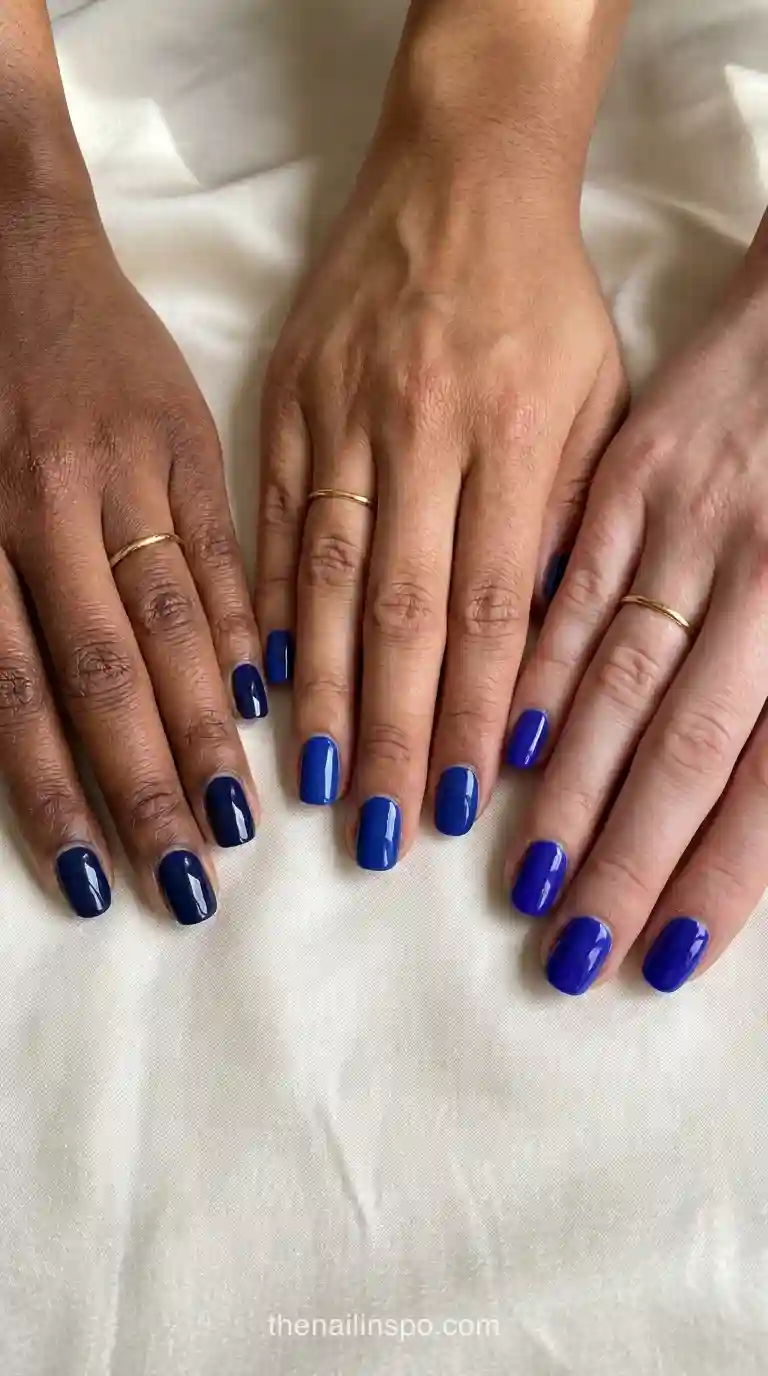
Navy nails behave like a navy suit. From across a conference table they read almost as black, and they look good with both gold and silver rings. Length changes everything, though. Short nails for work, with a 1 to 2 mm free edge, make navy look deliberate. Put the same bottle on long coffin nails and it starts to look like a night out.
My take, and some stylists will disagree: a fresh navy on short nails is a safer office choice than a sheer pink with a chip and a visible regrowth line.
 Read NextCute Nails 2026: 22 Best Milky Looks You Will Obsess
Office Dress Code Nails: How Blue Rates by Workplace

Most written office dress code nails rules cover length and condition, not hue. The table sorts common workplace types by what they usually restrict and which blue, if any, fits. Treat it as a starting point. Your employee handbook overrides anything a nail blog says.
| Workplace | What the rules usually target | Blue that fits | Verdict |
|---|---|---|---|
| Conservative corporate (law, finance, banking) | Neatness and condition; color is rarely named in writing | Solid navy or midnight on short, rounded nails | Go, as long as it stays chip-free and skips nail art |
| Uniformed client-facing roles (airlines, hospitality) | Length first: United Airlines caps nails at 0.25 inches past the fingertip for customer-facing staff | Navy that matches the uniform palette, filed well inside the cap | Go if the length complies and the brand has no approved color list that excludes blue |
| Healthcare and food handling | Many facilities restrict artificial nails and extensions in hands-on roles, and food safety rules often require gloves over polish | Fresh lacquer on natural nails, only where the policy allows polish | Check the written policy before booking; gel and extensions are often off the table |
| Creative, agency and tech | Usually no written nail rule at all | Any blue, including cobalt, chrome and French tips | Go; brights belong here |
| Bridal and event styling | The client’s brief, often tied to the wedding palette | Dusty blue as the something-blue, or a single navy accent nail | Go once the couple signs off on it |
What surprises most people is that length limits are more common and far more specific than color rules. An airline will give you a measurement. A law firm will say “neat.” So I shape the nails first and pick the color after.
Tanya’s note: Blue shows a chip faster than nude does, because the pale nail plate flashes through the dark color. If your handbook says “neat and professional,” that’s about condition. Do navy a day or two before a heavy client week, not a week ahead.
Work Appropriate Nail Colors in Corporate Offices
In conservative offices, work appropriate nail colors look like one solid, opaque shade: nudes, soft pinks, classic reds, burgundy and deep navy all qualify. Sheer jelly blues and glitter toppers are a gray area. My rule of thumb: if you’d find the shade on a men’s suiting swatch, it’s safe for the office.
What Nail Colors Are Allowed in the Military?
In the US Army, very few. Army Regulation AR 670-1 classifies every shade of blue as an unauthorized extreme color, so female soldiers are limited to nude and light pink shades, plus the American manicure. Other branches write their own standards, and regulations get revised. For your service, check the current official version, not a nail blog (this one included).
Blue Nail Polish Staining and the Chemistry Behind It
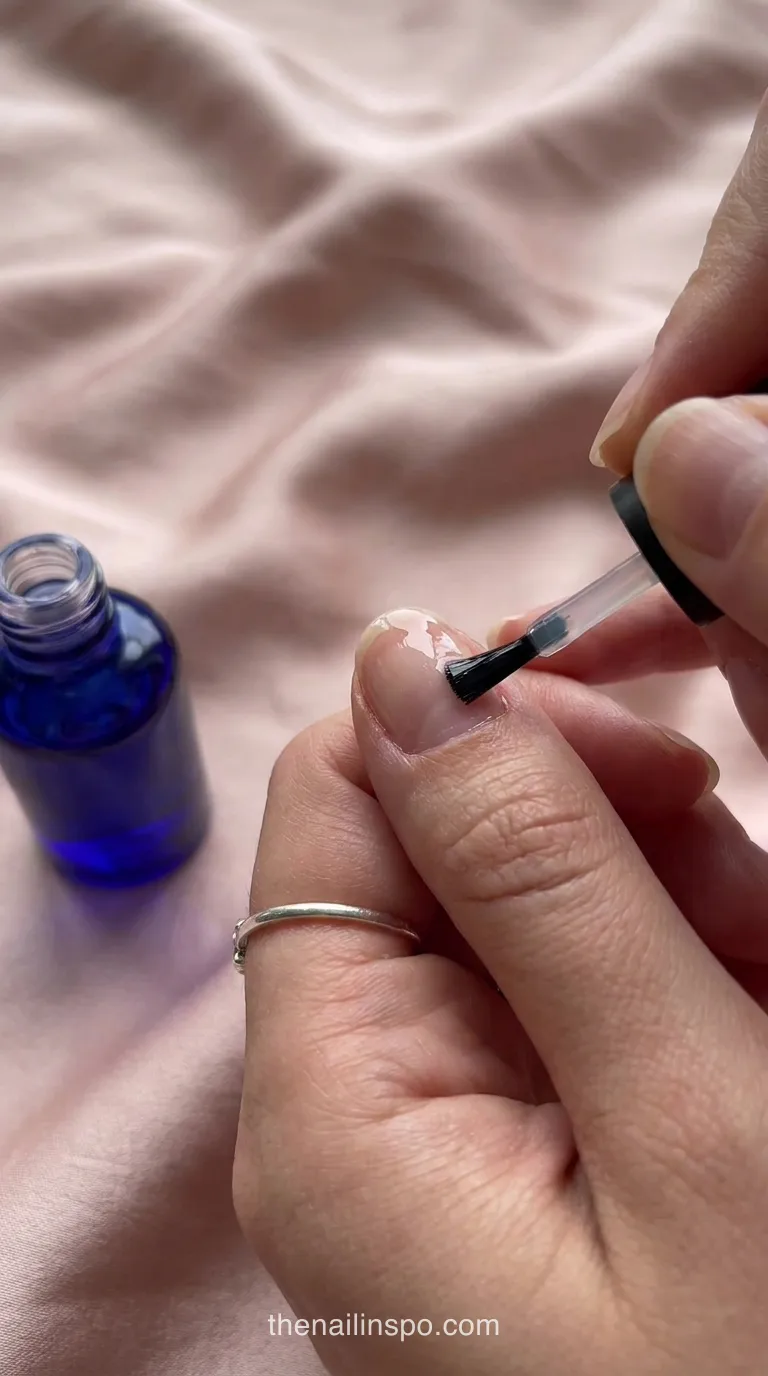
Blue nail polish staining usually comes from the pigment itself. Many deep blues use ferric ammonium ferrocyanide, the pigment sold as Prussian blue or iron blue. Technicians report that it migrates into the top layers of nail keratin when nothing blocks it, so you see a dingy blue-gray tint the day you switch back to nude for a Monday presentation.
Staining like this grows out with the nail. I’m a manicurist, not a doctor, though, and I won’t diagnose anything. A discoloration that doesn’t move forward as the nail grows is a question for a dermatologist.
Why Dark Gel Polish Wrinkles Under the Lamp
Dark navy gel wrinkles because the pigment stops UV light from reaching the bottom of a thick coat. The surface cures and shrinks while the layer underneath stays soft, so the top skin buckles. Technicians call this pigment blockade, and it causes most gel polish wrinkling I see in dark shades. The fix is mechanical: coats thin enough for light to pass all the way through.
The usual at-home mistake is laying on a heavy second coat to hide streaks. Streaks in a first navy coat are normal. Don’t overcorrect them.
Base Coat for Dark Polish: Why One Layer Fails
With regular lacquer, practitioners block staining with two coats of a nitrocellulose-based base coat before any dark blue goes on. A single coat tends to leave thin spots, especially at the free edge, where filing and touch-ups wear it down. So here’s the decision rule I use: if navy lacquer is staying on longer than a weekend, double the base. If it’s a two-day color, one coat is a reasonable gamble.
 Read NextBest November Nails Ideas 2026: 45 Gorgeous Styles!
Gel Manicure for Work: Steps to a Chip-Free Navy Finish

A gel manicure is the most reliable way to keep navy chip-free between bi-weekly appointments, but only if every layer is fully cured. Gel feels hard at roughly 50% cure, well before it reaches the roughly 90% chemical conversion technicians aim for. Surface-dry doesn’t mean cured. I’d rather see a client in well-applied lacquer than in undercured gel that feels finished and isn’t.
Step 1: File to a Short, Soft Square Shape
Trim to a free edge of about 1 to 2 mm and file a soft square or squoval. Rounded corners take less impact at the tip, where chips start, and a short edge keeps you inside strict length limits like the 0.25-inch cap some employers set.
Step 2: Apply and Cure a Thin Gel Base
Push back the cuticle and buff away the surface shine with a fine buffer. Wipe the nail plate with alcohol and let it dry. Brush on a thin gel base, keep it off the skin, and cure it for at least 60 seconds or the full time your lamp and gel brand specify, whichever is longer.
Step 3: Cure Navy Gel in Ultra-Thin Layers
Apply the navy color in coats thinner than 0.1 mm, pressing the brush flat so the first layer looks almost sheer. Cure each coat for at least 60 seconds. A streaky first coat is normal, and a second thin coat evens it out. Stop at two coats instead of adding a thick third one.
Step 4: Cap the Free Edge and Seal With Top Coat
Run the top coat along the front edge of the nail as well as across the surface, then cure for at least 60 seconds and remove the tacky layer if your top coat leaves one. The capped edge is what stops tip wear from typing all day.
Tanya’s note: If your navy wrinkles and your pinks never do, look at the lamp and the coat thickness before you blame the gel brand. A lamp that seems fine can still undercure dark pigment long before it has trouble with sheer nudes.
Fixing Chipped Nail Polish Before a Meeting
If the chip is right at the tip, file the edge down slightly, swipe a thin layer of matching navy over it and finish with a quick-dry top coat. If the chip is mid-nail, remove that nail completely. A patch in the middle of a dark nail is far more obvious than a nail that’s a little shorter than the others.
Keep a mini bottle of your exact shade in your bag. Navy formulas vary more than people expect, and under office lighting a close-enough blue looks like a mismatch.
Recommended for you- Blue and silver Hanukkah nail designs: holiday sets that tone down easily for a December office
- Seasonal nail inspo lookbooks on TheNailInspo: shade and bridal ideas sorted by occasion and season
Professional Blue Nails: Frequently Asked Questions
Should I wear blue nails to a job interview?
For a conservative interview, I’d choose a clean navy or a sheer nude over anything bright, because the interviewer has no other context for you yet. For a creative role, a considered blue can read as taste. Either way, do them a day ahead so the finish is fully set, and hold off on nail art until you’ve seen what people there actually wear.
Are blue French tips okay for the office?
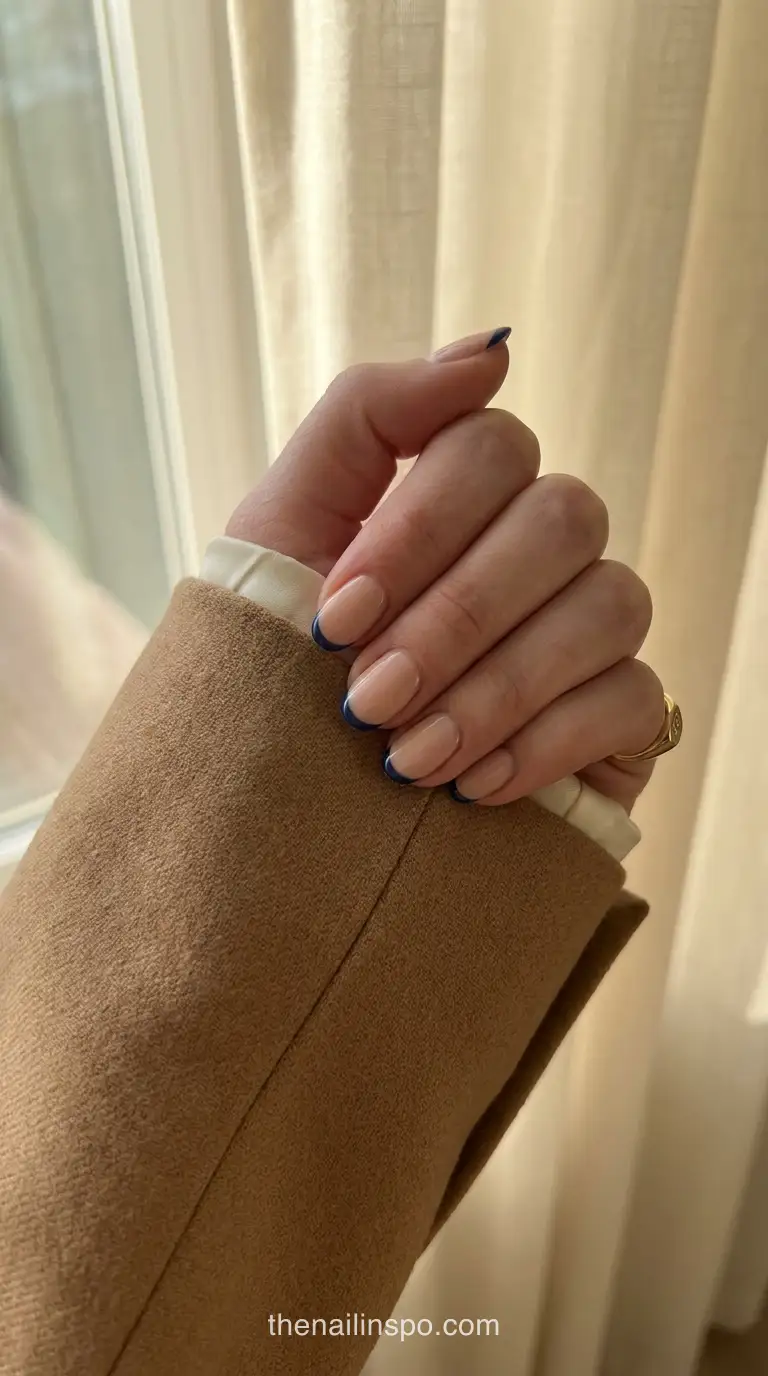
Thin blue French tips on short nails usually pass in business-casual offices, since most of the nail stays neutral. Thick tips, glitter lines or a different color on every finger push the look toward nail art, which conservative workplaces judge more strictly than solid color. A navy micro-French is the compromise I like best for client-facing weeks.
Is baby blue more acceptable than navy at work?
Not automatically. Baby blue is lighter but more noticeable, since pastel blue on hands catches the eye, while navy reads close to black from across a desk. In conservative offices, navy usually blends in better. In summer, or in creative workplaces, a milky baby blue looks fresh and its regrowth line is softer.
How much does it cost to keep gel nails up for work?
A professional gel manicure averages about $53 in New York City. At that price, bi-weekly visits pass $1,300 a year before tips, while annual upkeep across markets typically lands between $600 and $1,300 depending on the city and the salon. If that’s more than you want to spend, a well-applied lacquer refreshed with top coat midweek is the budget route.
Can I wear blue toenails with open-toe shoes at work?
Where open-toe shoes are allowed at all, toenail color is judged far less strictly than fingernails, and a navy or cobalt pedicure is rarely an issue in offices that permit sandals. The bigger dress code risk is the open toe itself, which many conservative and uniformed workplaces don’t allow, so check that before worrying about color.
Before you book, find the one line in your handbook about hands. If it gives a length, file first and choose the color second. If it talks about condition, time your navy around your calendar: fresh gel or lacquer two days before your heaviest client week, not the morning of. If the rule actually names colors, follow it exactly, even if the break room thinks it’s outdated.

Comments (0)
No comments yet. Leave a thought below!